The Business Case for Strengths

The Business Case for Strengths

Blogs and Stories

The Business Case for Strengths

meeting

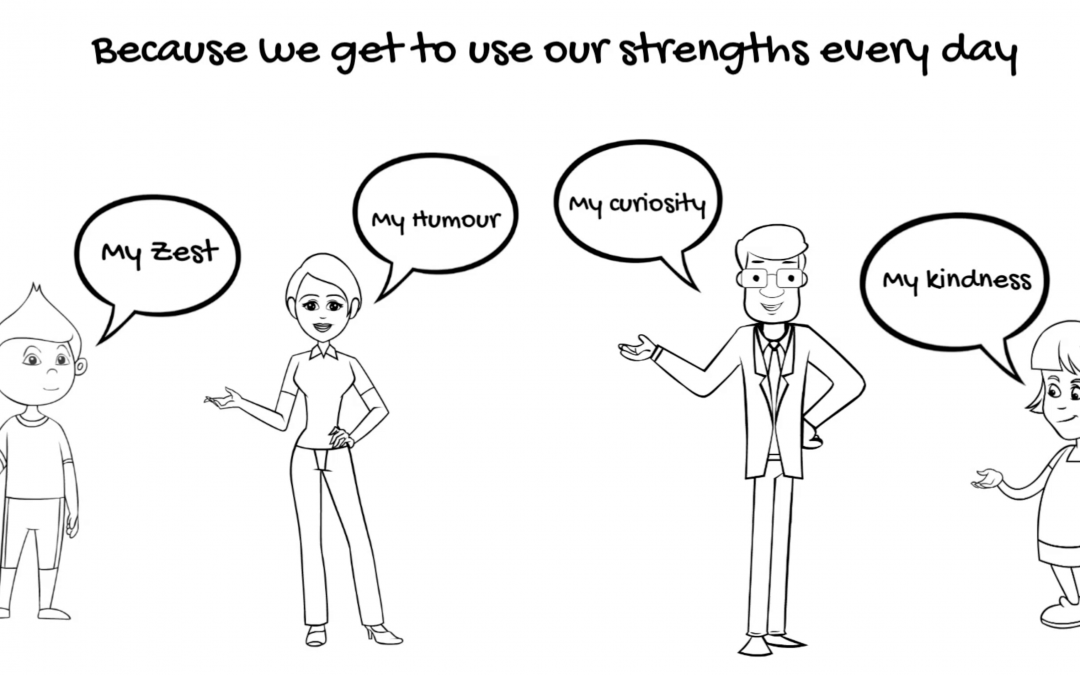
I have recently been exploring research on why it is worthwhile for people to understand and use their character strengths. In the process, I came across an excellent publication by The Strengths Lab, a Michelle McQuaid Program which sets out a Business Case for Strengths citing 10 reasons overwhelmingly supported by authoritative research.   

Those 10 reasons are:

  1.  People who use their strengths more are more likely to be happy and flourishing with research indicating lower levels of depression, higher levels of vitality and good mental health.
  2. People who use their strengths more experience less stress with higher levels of positivity reported.
  3. People who use their strengths more feel healthier and have more energy associated with a number of healthy behaviours and lower likelihood of absenteeism reported.
  4. People who use their strengths more feel more satisfied with their lives with reportedly good problem solving skills and better work performance, resistance to stress and physical health.
  5. People who use their strengths more are more confident with studies showing that strengths knowledge and strengths use are associated with self-efficacy, self-esteem, self-acceptance and self-confidence.
  6. People who use their strengths more experience faster growth and development especially when learning something new or difficult.
  7. People who use their strengths more are more creative and agile at work being able to better adapt to change, engage in more creative and proactive behaviours, pay more attention to detail and work harder.
  8. People who use their strengths more feel more satisfied and experience more meaning in their work with studies showing that those using their signature strengths are more likely to experience job satisfaction, pleasure, engagement and meaning in their work.
  9. People who use their strengths more are more engaged in their work with studies showing that people regularly using their strengths are up to 6 times more engaged in what they’re doing.
  10. Managers who focus on people’s strengths experience improved team performance and greater success with lower levels of staff turnover and higher levels of productivity, customer satisfaction and profitability.

So, in summary, investing in strengths delivers massive paybacks through increases in employee engagement, staff health wellbeing and happiness, productivity, profitability and customer satisfaction and reductions in absenteeism, depression and staff turnover.

That sounds like a pretty good business case to me.

Acknowledgement: content on the 10 reasons is drawn from “Introduction to strengths – The Business Case for Strengths published by The Strengths Lab, a Michelle McQuaid Program” . Refer https://www.michellemcquaid.com/.

Interested in learning more about PosWork’s strengths coaching services? Call us on 0438 533 311 or email info@poswork.com.au.


CONTACT US

PosWork

A Division of Ridgeline Human Resources Pty Ltd
ABN : 24 091 644 094

info@poswork.com.au

0438 533 311

LET'S HAVE A CHAT

How work can be a haven from everyday worries

How work can be a haven from everyday worries

Blogs and Stories

How work can be a haven from everyday worries

meeting

I recently watched a video on Linkedin which featured expert employment and WHS lawyer, Andrew Douglas, talking about psychological safety in the workplace. In that, he spoke about the role that work plays as a haven from everyday personal stresses and anxieties and that really resonated. So I thought I should explore that concept further and here are a few thoughts.

Would you agree that being able to focus your mind on a job and use your talents can really give you a bit of temporary relief if you have any worries personally, with family or elsewhere in life? I do – it won’t solve whatever problems you might be struggling with but it can help you to live a bit better with those struggles.

Of course, you need to have the right “psychologically safe” work environment to do that. Simply replacing one set of stresses and anxieties for another doesn’t help – that just adds further weight and continuity of anxieties and that aggregation can be especially damaging to mental health and wellbeing.

So let’s consider why the right work environment can help us to manage our everyday struggles in life.

Firstly, work can provide a sense of structure and purpose, helping to keep your mind focused and occupied. When you’re engrossed in meaningful tasks, it can redirect your attention away from anxious thoughts and uncertainties.

Additionally, work often involves goal-setting and problem-solving, which can give you a sense of achievement and control over your circumstances. By engaging in productive work, you may experience a boost in confidence and a feeling of accomplishment, counteracting the negative effects of anxiety.

Furthermore, work can offer a social environment where you interact with colleagues and form connections. These relationships can provide support and a sense of camaraderie, which can be comforting and contribute to overall well-being.

When you look at these factors, the PERMAH wellbeing model makes a lot of sense as a tool to develop good mental health and wellbeing practice. Every one of the 6 pillars – Positive emotions, Engagement, Relationships, Meaning, Accomplishment and Health – feature in those three ways that the right work environment can provide a haven.

A bonus is that, with the new positive duty that businesses have to eliminate or control psychosocial hazards, the PERMAH Workplace Wellbeing Survey can play a significant part  in meeting the duty to assess risks associated with psychosocial hazards in your workplace…..plus every employee who does the survey gets their own personal wellbeing report and access to a personal wellbeing plan template and lots of tips on things to do to enhance wellbeing in each of the 6 PERMAH pillars.

Try the survey free at https://permahsurvey.com/

iInterested in learning more about PosWork’s workplace wellbeing and psychologically safe workplace services? Call us on 0438 533 311 or email info@poswork.com.au.


CONTACT US

PosWork

A Division of Ridgeline Human Resources Pty Ltd
ABN : 24 091 644 094

info@poswork.com.au

0438 533 311

LET'S HAVE A CHAT

Why you need an EVP

Why you need an EVP

Blogs and Stories

Why you need an EVP

meeting

We hear employers everywhere telling us that they need more and better people which is no surprise given that we have been having very low unemployment rates and there are chronic skills shortages in so many sectors for lots of reasons. 

So what can a business do about that to get an advantage over competitors in the labour market?

You need an Employer Value Proposition (EVP) which essentially answers the question (in a positive way): “Why would I want to work for you?”

Here are several reasons why having a compelling EVP is important:

  1. Attracting top talent: A strong EVP helps you stand out from other employers and attract highly skilled individuals. Job seekers are increasingly looking for more than just financial compensation. They seek opportunities for growth, life balance, a positive work environment, and a sense of purpose. By clearly articulating your value proposition, you can appeal to the aspirations and needs of potential candidates.
  2. Retention of employees: A well-defined EVP can help retain your existing employees. When employees feel valued and connected to and understand what they like about working in your business, they are more likely to stay.
  3. Employee engagement and productivity: When employees feel that their needs and aspirations are aligned with the organisation’s goals, they become more committed and motivated. They are more likely to go above and beyond in their work, leading to higher productivity and better outcomes.
  4. Cost savings: Investing in a strong EVP can result in cost savings in the long run. By attracting and retaining the right talent, you can reduce turnover, save on hiring expenses and training costs, and maintain a more stable and productive workforce.
  5. Cultural alignment: An EVP helps attract individuals who align with your organizational culture and values. When employees share common values, it fosters a sense of belonging and creates a positive work environment. This, in turn, enhances collaboration, teamwork, and overall organizational effectiveness.

So there are lots of reasons why having an EVP makes good business sense (just as having the right value proposition for your customers does).

Of course, it has to be real or it will just create contradictions which can be far more damaging than not having an EVP at all.


Want to know more about how we can help you define your EVP and make it real? Call us on 0438 533 311 or email info@poswork.com.au.


CONTACT US

PosWork

A Division of Ridgeline Human Resources Pty Ltd
ABN : 24 091 644 094

info@poswork.com.au

0438 533 311

LET'S HAVE A CHAT

Is forgiveness divine?

Is forgiveness divine?

Blogs and Stories

Is forgiveness divine?

meeting

“To err is human, to forgive divine”. That famous quotation from celebrated English poet, Alexander Pope

Did you know that having an attitude of forgiveness has many positive effects on our mental health and wellbeing?

Let’s explore those.

  1. Emotional well-being: Forgiveness frees you from the burden of negative emotions such as anger, resentment, and bitterness. By letting go of grudges, you release yourself from the emotional pain associated with holding onto past grievances. This can contribute to improved mental and emotional well-being.

  2. Reduced stress: Holding onto anger and resentment can lead to chronic stress, which negatively affects both your physical and mental health. Forgiveness helps to alleviate this stress by promoting a sense of peace and acceptance. It allows you to move forward without carrying the weight of past grievances.

  3. Improved relationships: Forgiving others can strengthen your relationships. Holding onto grudges creates a barrier between you and the person you’re holding a grudge against. By practicing forgiveness, you open the door for reconciliation and improved communication. It fosters empathy and understanding, leading to healthier and more fulfilling relationships.

  4. Personal growth: Forgiveness is a powerful tool for personal growth and development. It requires introspection and self-reflection, as it encourages you to examine your own emotions and reactions. By choosing forgiveness, you demonstrate emotional maturity and resilience, which can help you navigate future conflicts more effectively.

  5. Health benefits: Studies have shown that forgiveness has positive effects on physical health. Letting go of grudges and cultivating forgiveness has been associated with lower blood pressure, reduced risk of heart disease, improved immune system function, and decreased levels of depression and anxiety. Forgiveness contributes to overall well-being by promoting a healthier mind and body.

  6. Inner peace and happiness: Forgiveness allows you to find inner peace and happiness. By releasing negative emotions and letting go of past hurts, you create space for positive emotions such as love, compassion, and joy. It helps you to live in the present moment and focus on building a brighter future, unburdened by the weight of the past.

  7. Spiritual and moral growth: Forgiveness is often seen as a virtue in many spiritual and religious traditions. It aligns with principles such as compassion, kindness, and mercy. Cultivating forgiveness can contribute to your spiritual and moral growth by helping you develop a greater sense of empathy, understanding, and acceptance towards others.

Remember that forgiveness is a personal journey, and it doesn’t mean condoning or forgetting the actions of others. It is about freeing yourself from the negative impact of those actions and choosing to move forward with a lighter heart and a more compassionate mindset.

Want to know more about how we can help you with workplace wellbeing? Call us on 0438 533 311 or email info@poswork.com.au.


CONTACT US

PosWork

A Division of Ridgeline Human Resources Pty Ltd
ABN : 24 091 644 094

info@poswork.com.au

0438 533 311

LET'S HAVE A CHAT

A Better Change Process

A Better Change Process

Blogs and Stories

A Better Change Process

meeting

We chose the Appreciative Inquiry process as our change management methodology because we believe (and the evidence shows) that it delivers much more positive results and a much more positive, inclusive and collaborative experience for participants than traditional change management processes. Her is she background on what it is, how it works and why it is beneficial.

Appreciative Inquiry (AI) is a problem-solving and change management approach that focuses on identifying and amplifying the positive aspects of an organization or system. It emphasizes the exploration of what works well, the discovery of strengths and opportunities, and the envisioning of a desirable future. AI is rooted in the belief that organizations and individuals grow and thrive by building on their strengths rather than focusing solely on fixing problems.

The process of AI typically follows a four-phase cycle known as the 4-D model:

  1. Discovery: This phase involves identifying and appreciating the positive qualities, experiences, and successes within the organization. It includes interviews, surveys, and other data collection methods to gather stories and examples of what has worked well in the past.

  2. Dream: In this phase, participants collectively envision a desired future based on the discoveries from the previous phase. They engage in creative and collaborative exercises to imagine an ideal state for the organization and explore possibilities.

  3. Design: Here, the focus shifts to designing practical and actionable strategies to realize the envisioned future. Participants identify specific steps, goals, and initiatives that can help move the organization toward the desired state. They leverage the strengths and positive elements identified earlier to shape the design of these initiatives.

  4. Destiny (or Delivery): The final phase involves the implementation and execution of the designed strategies. The organization takes concrete actions, monitors progress, and adjusts its approach as needed. This phase emphasizes learning, adaptation, and ongoing improvement based on feedback and results.

Appreciative Inquiry is beneficial for several reasons:

  1. Positive focus: Unlike traditional problem-solving approaches, AI places emphasis on what is already working well, fostering a positive mindset and energizing participants. This approach creates a more engaging and motivating environment for change.

  2. Strengths-based approach: By identifying and amplifying strengths, AI helps organizations build upon their existing capabilities and resources. It encourages individuals to leverage their skills and talents, leading to increased self-confidence and a sense of empowerment.

  3. Collaboration and engagement: AI is a participatory process that involves multiple stakeholders within an organization. It promotes collaboration, communication, and shared ownership of the change process. This involvement enhances employee engagement, buy-in, and commitment to the desired future.

  4. Sustainable change: By focusing on strengths and positive elements, AI generates momentum for sustainable change. The approach builds on what is already successful, creating a foundation for continuous improvement and long-term growth.

  5. Innovation and creativity: Appreciative Inquiry encourages participants to think creatively and explore new possibilities. By envisioning an ideal future, organizations can generate innovative ideas and approaches that may have otherwise been overlooked.

  6. Organizational learning: AI promotes a learning culture within organizations. By reflecting on past successes and applying them to future endeavors, organizations can develop a deeper understanding of their strengths and capabilities, fostering a continuous learning and improvement mindset.

Overall, Appreciative Inquiry offers a constructive and positive approach to organizational change, empowering individuals, fostering collaboration, and enabling sustainable growth and improvement.


Want to know more about how you can use Appreciative Inquiry to run better change management programs? Call us on 0438 533 311 or email info@poswork.com.au.


CONTACT US

PosWork

A Division of Ridgeline Human Resources Pty Ltd
ABN : 24 091 644 094

info@poswork.com.au

0438 533 311

LET'S HAVE A CHAT

About Engage for Success, our choice for employee engagement

About Engage for Success, our choice for employee engagement

Blogs and Stories

About Engage for Success, our choice for employee engagement

meeting

We chose the Engage for Success framework because it is the simplest, most easily understood, practical and flexible model that owe know and it is backed by extensive and qualified research commissioned by the UK Government. For small businesses in particular, the four pillars of employee engagement provide a really sound foundation for developing a high performing business where people feel valued and want to contribute. Here is a bit of background information on the movement.

The Engage for Success movement is a UK-based initiative that aims to promote employee engagement as a means to improve organizational performance, productivity, and well-being. It was launched in 2012 as a response to a growing recognition of the importance of employee engagement in the workplace.

The movement was formed as a result of a government-sponsored report called “Engaging for Success: Enhancing Performance through Employee Engagement,” also known as the MacLeod Report. This report, led by David MacLeod and Nita Clarke, highlighted the potential benefits of employee engagement for both employees and organizations. It emphasized the role of leadership, management practices, and employee involvement in creating an engaged workforce.

Engage for Success operates as a not-for-profit movement, bringing together a diverse group of individuals and organizations from the public and private sectors, including business leaders, HR professionals, academics, and employee engagement experts. The movement aims to share knowledge, research, and best practices related to employee engagement and to provide a platform for collaboration and dialogue.

The core belief of the Engage for Success movement is that when employees are engaged, they are more likely to be motivated, productive, and committed to their work. Engaged employees tend to have higher levels of job satisfaction, better physical and mental well-being, and are more likely to contribute innovative ideas and discretionary effort to their organizations. This, in turn, can lead to improved business performance, customer satisfaction, and overall organizational success.

Engage for Success focuses on four key enablers of employee engagement:

  1. Strategic narrative: Developing a compelling vision, purpose, and values that inspire employees and give them a sense of direction.
  2. Engaging leadership: Creating a culture of leadership that empowers and supports employees, provides clear direction, and enables effective communication.
  3. Employee voice: Encouraging two-way communication, involving employees in decision-making processes, and valuing their opinions and ideas.
  4. Organizational integrity: Ensuring consistency between the organization’s values, behavior, and practices, which helps build trust and fosters a positive work environment.

The movement offers a variety of resources, research findings, case studies, and tools to help organizations and individuals enhance employee engagement. These resources include events, webinars, workshops, and online communities that facilitate knowledge exchange and collaboration among members.

The Engage for Success movement has gained recognition and support from various stakeholders, including business leaders, policymakers, and academics. It has played a significant role in promoting the importance of employee engagement as a key driver of organizational success and advocating for its adoption in workplaces across the UK and beyond.


Want to know more about how you can use the Engage for Success model to build a better workplace? Call us on 0438 533 311 or email info@poswork.com.au.


CONTACT US

PosWork

A Division of Ridgeline Human Resources Pty Ltd
ABN : 24 091 644 094

info@poswork.com.au

0438 533 311

LET'S HAVE A CHAT