Our Local FIRM – still going strong
Blogs and Stories

The origins
19 years ago, our Practice Leader, Peter Maguire, invited a few local business owners to lunch to catch up and get to know each other better. They enjoyed it and decided to make it a monthly event
Someone invited someone and the group grew to the point where Peter decided that there was an opportunity to do something good that’s different from any other business group going around. And so Our Local FIRM was born. .
Our Name
Peter came up with the “Our Local FIRM” name which means:
- Our = a community
- Local = centred on Croydon in Melbourne’s outer east
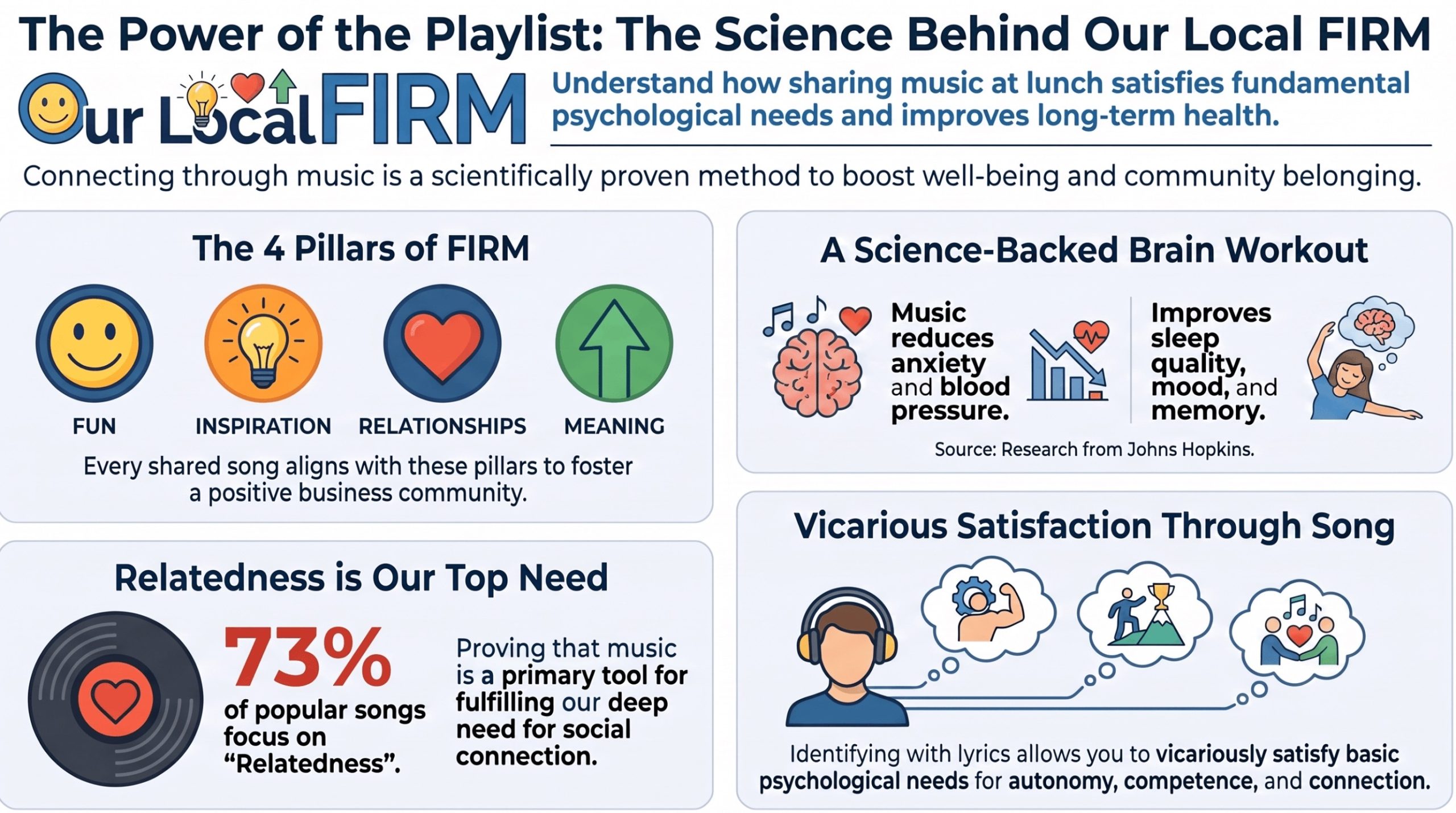
- FIRM represents the group’s values
- F = Fun
- I = Inspiration
- R = Relationships
- M = Meaning
These are the focus for the group which also has a few simple rules :
- No selling allowed
- Respect everyone
- No category limitations
How it works
Every month, the group meets for lunch at the Dorset Gardens Hotel in Croydon.
We facilitate the group as a free service to the local business community. Attendees pay for their own meals and drinks and there is no other charge.
There is a feature conversation led by a subject matter expert with everyone there having the opportunity to participate and learn. Most of the time is just spent in casual conversation between people while waiting for and then having a meal. No promotions, no pointless process, no KPIs, no pitches – just open, casual and unscripted conversation.
Plus one special activity. Each lunch has one of the values designated as the lunch theme ie Fun, Inspiration, Relationships and Meaning. Attendees nominate a song that has significance for them in the context of the designated theme and we then add them to Our Local FIRM Playlists on YouTube music to be shared with everyone.
Why music?
There are lots of good reasons. For example:
- Scientific research tells us that music is good for us because it reduces blood pressure and anxiety and boost sleep, mood and memory
- It is about Fun: sharing songs stimulates conversation, memories and positive interactions
- It is about Inspiration: the songs that we remember and nominate are ones that have impacted on us in some way so they generate optimism and hope
- It is about Relationships: when we share a song , we share something of ourselves and when others share, we see something about them (and sometimes something that we didn’t expect)
- It is about MEANING: because song choices are aligned with one of the Values, participants reflect on what that song means to them and or sometimes the cause or message that the song was created to give
Plus by collecting them in playlists, we keep hold of the memories of those meetings and the songs that people chose. We also get introduced to new artists who we haven’t come across before and we share music across generations.
Music really is a great unifier and relationship builder.
That’s why!
If you would like to learn more about Our Local FIRM, complete the Let’s have a chat form below and Peter will give you a call..
CONTACT US
PosWork
A Division of Ridgeline Human Resources Pty Ltd
ABN : 24 091 644 094
info@poswork.com.au
0438 533 311
QUICK RESOURCE LINKS