Why a growth mindset is important for wellbeing

Why a growth mindset is important for wellbeing

Blogs and Stories

Why a growth mindset is important for wellbeing

meeting

Do you have a growth mindset and what difference does it make to your wellbeing and relationships if you do? Here we explore how the theory on growth and fixed mindsets, first introduced by psychologist Carol Dweck, plays out in a work setting.

A person’s mindset can significantly influence their performance, their relationships with colleagues, and their overall success. It can make a difference to how individuals approach challenges, development, and collaboration.

Understanding how growth and fixed mindsets manifest in work environments can lead to improved cultures, greater innovation, and enhanced personal satisfaction.

Growth Mindset at Work

A growth mindset is the belief that skills and intelligence can be developed through dedication, hard work, and continuous learning.

People with this mindset thrive in environments that encourage experimentation, feedback, and collaboration.

They tend to see challenges as opportunities for improvement rather than as threats and they tend to focus on what they can learn from an experience and what improvements can be made rather than allowing perceived obstacles or uncertainties get in the way of progress.

In practical terms, employees with a growth mindset:

1. Embrace challenges: They willingly take on tasks that push their limits, seeing them as opportunities to expand their capabilities. Whether it’s learning a new skill or taking on a demanding project, they approach the situation with a problem-solving attitude.

2. Persist through setbacks: Rather than seeing a mistake or failure as a reflection of their abilities, they view it as a temporary issue that can be solved with effort and adjustment. This resilience allows them to bounce back from difficulties with a focus on improvement.

3. Seek feedback: Individuals with a growth mindset actively seek feedback to learn how they can improve. They view constructive criticism as a valuable tool for self-improvement and are more likely to use it to refine their skills and performance.

4. Collaborate openly: They are willing to share knowledge and ask questions, believing that learning from others is an essential part of growth. They support the growth of their colleagues, creating a cooperative and forward-thinking work culture.


A growth mindset in the workplace leads to a higher level of innovation, as employees are more willing to take calculated risks and explore new solutions without the fear of failure. It also creates a positive environment where teams support each other and are not afraid to make mistakes in the pursuit of progress.

Fixed Mindset at Work

On the other hand, a fixed mindset is the belief that abilities, intelligence, and talents are static traits that cannot be significantly changed eg I am who I am and you’ll just have to accept me as I am.

People with a fixed mindset often avoid situations where they may fail or appear less competent, leading to stagnation in their professional development.

In the workplace, this mindset can manifest in several detrimental ways:

1. Fear of failure: Employees with a fixed mindset tend to shy away from challenging tasks or projects that might expose their weaknesses. They prefer sticking to what they already know, which limits their opportunities for growth.

2. Avoidance of feedback: They often resist feedback, perceiving it as personal criticism rather than constructive advice. This can lead to defensiveness or complacency, hindering their ability to learn from mistakes.

3. Blame culture: People with a fixed mindset may place blame on external factors or colleagues when things go wrong, as accepting responsibility would challenge their belief in their fixed abilities. This can also be an issue when issues arise in workplaces and workplace processes are targeted on finding fault and applying consequences rather than exercising curiosity to generate consensus solutions.

4. Undermining collaboration: Because they see skills as static, they may be reluctant to collaborate openly, fearing that others will outshine them or highlight their weaknesses. This can result in a competitive, rather than cooperative, work culture.

People with a fixed mindset are more likely to be threatened by change because they want things to stay as they are rather than venture into the uncertainty of something new. This is one of the reasons why change management always comes up as a significant area for improvement in employee satisfaction surveys.

Fostering a Growth Mindset Culture

To foster a growth mindset in the workplace, leaders need to emphasise the importance of learning, effort, and improvement over natural talent or immediate success. Encouraging employees to take risks, learn from failure, and seek ongoing development is key. This can be achieved by:

1. Praising effort and learning: Managers should focus on recognizing the process employees go through to achieve results rather than just the outcomes. This reinforces the idea that effort leads to improvement.

2. Providing constructive feedback: Rather than merely pointing out mistakes, feedback should offer clear guidance on how to improve and grow. This helps employees see challenges as areas for development.

3. Encouraging collaboration: A workplace that encourages the sharing of ideas and learning from others will naturally promote a growth mindset.

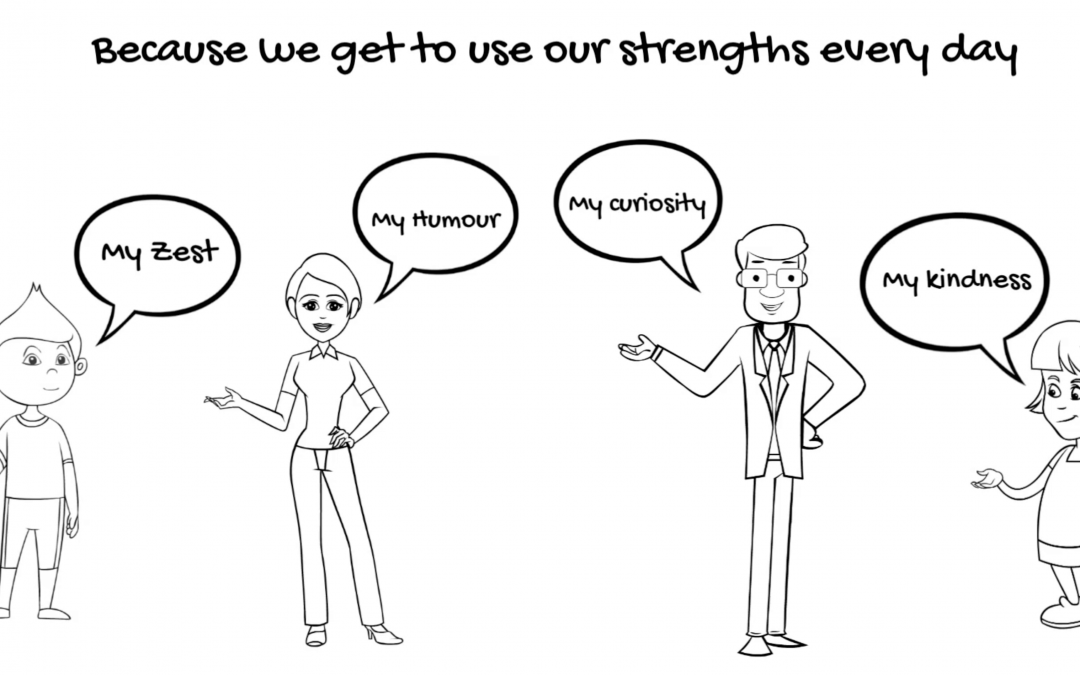
What can also be helpful is aiding employees to understand their inherent strengths by using character strengths instruments like VIA Character Strengths and giving them opportunities to use their signature strengths as well as supporting them when they need to leverage their lesser strengths.

Fostering a growth mindset mentality plays an important part in developing and maintaining a psychologically safe workplace culture because it encourages people to speak up and to work together to eliminate or control psychosocial hazards and to not be bystanders.

If you would like to explore the ways that we might be able to help you to make yours a great workplace, please call us on 0438 533 311 or email info@poswork.com.au.

CONTACT US

PosWork

A Division of Ridgeline Human Resources Pty Ltd
ABN : 24 091 644 094

info@poswork.com.au

0438 533 311

LET'S HAVE A CHAT

Are you micro managing?

Are you micro managing?

Blogs and Stories

Are you micro managing?

meeting

You love the fact that this manager is always on top of everything that is going on in his team but is he actually micro-managing and creating risks to psychological safety for himself, his team and your business? Did you know that micro-managing is associated with a number of the psychosocial hazards in Safe Work Australia’s “Model code for managing psychosocial hazards at work”? 

So what is micro-management?

Essentially, micro-management happens when an employee is subjected to excessive scrutiny, overly constant supervision, and an intrusive level of management involvement in the performance of their work.

Often, the manager might not realise that they are micro managing – they might think that  they are just  ensuring productivity and quality or being available to help but they are inadvertently sending a message to the employee that they don’t trust them to do it themselves.  This can be extremely detrimental to both the professional and personal well-being of employees.

How does micro-management affect people?

When employees feel constantly monitored and questioned, it creates an environment of suspicion and unease. That erodes trust which is a foundational element of any healthy work relationship and, in turn, that leads to decreased morale and engagement among team members.

Employees may become hesitant to take initiatives or make decisions, fearing constant scrutiny and potential criticism. They can be reluctant to put their hands up to take on additional tasks or responsibilities if they believe that that will result in potentially more scrutiny and exposure to criticism.

That can also lead to people feeling pressured and anxious which can result in them experiencing increased stress and burnout.

That is why micro-management is associated with psychosocial hazards.

What does micro-management look like?

The truth is that different people need different levels of supervision and different people want different levels of supervision – and those needs and wants don’t always align. 

So it can look different for different people.

A common trap is to adopt the same approach with everyone doing similar roles or within a team – for example, if one person is consistently getting things right and has proven that they know their stuff, do they require the same level of supervision as someone who is less experienced or lower performing? And what message are you sending them if you do apply the same level of supervision?

Sometimes, there are supervision standards that have to be applied from a governance perspective eg in medical settings or government services or the like. However, that doesn’t mean that you have to have the same process or conversation with each employee – you should be able to tailor it to the needs of both the individual and the organisation.

Moving from managing to coaching

 Gallup tells us that we will get the best results in productivity and employee wellbeing if managers become coaches for their people and especially if strengths and wellbeing are part of the conversation.

Gallup encourages regular check-ins with people by their manager/coach but that isn’t micro-management if the focus is on supporting the employee in being successful in their work rather than checking up on what they have been doing or unnecessarily requiring your sign-off on the work that they have done.

They can simply be conversations about how things are going like we have in our EngageMentality coaching model where we essentially ask four questions:

  1. What’s gone well?  
  2. What’s not going to plan?
  3. What’s new?
  4. What are we going to do about all of that?

Then you work together on the plan  with the manager/coach’s input being what is needed for the particular employee in the particular circumstances – no more and no less.

Conclusion

Micro-management is bad for business, bad for people and risky when it comes to psychosocial hazards. It is also far from enjoyable for managers who have the misfortune to be doing it and creates real risks of burnout for them.

So, as the saying goes, “let’s work smarter not harder” because micro-management is hard on everyone. 

If you would like to explore our EngageMentality process or any other of our PosWork programs for your workplace, please call us on 0438 533 311 or email info@poswork.com.au.

CONTACT US

PosWork

A Division of Ridgeline Human Resources Pty Ltd
ABN : 24 091 644 094

info@poswork.com.au

0438 533 311

LET'S HAVE A CHAT

Gallup tells us how to engage employees in 2024

Gallup tells us how to engage employees in 2024

Blogs and Stories

Gallup tells us how to engage employees in 2024

meeting

Gallup has released a “2024 Employee Engagement Strategy Checklist” in which it tells us that 44% of employees worldwide say they are stressed and proposes some things that organisations can do to get people more engaged and less stressed. 

Here is Gallup’s list:

  1. Check in on your managers because they are more likely to be feeling burned out and stressed and you need them to feel supported and capable of leading their people effectively.
  2. Prepare managers to have meaningful conversations with employees in which they recognise strengths and achievements, set and refine goals and priorities and support then in relationships and collaboration.
  3. Prioritise promoting vision and purpose, especially among remote workers for whom Gallup’s research says that only 28% feel connected to their organisation’s mission and purpose.
  4. Measure engagement to show employees that you care about their feedback and want to know how they are doing.
  5. Take action on survey results – nothing builds positive momentum for an engagement initiative more than asking for feedback, doing something about it and sharing and celebrating positive results.

They say that their research shows that 80% of employees who say they have received meaningful feedback in the past week are fully engaged, regardless of how many days they worked in the office.

When it comes to having meaningful conversations with employees, Gallup said that they should include:

  1. Recognition or appreciation of recent work
  2. Collaboration and relationships
  3. Current goals and priorities at work
  4. Employee strengths and the things that they do well

How long should these conversations be? If they are done regularly (ie weekly), they should take no longer than 15 to 30 minutes.

Our EngageMentality Model

This is a continuous coaching model which incorporates all of the features that Gallup recommends plus more.

We did our own research on the things that we believe impact on an employment experience and by extension employee engagement and wellbeing – these “coaching lenses” are:

  1. Roles  – the job that I do plus any of those other responsibilities that I might take on as a leader or an employee or safety representative or first aider, etc
  2. Relationships – I rely on certain people for certain things and others rely on me for certain things
  3. Values and behaviours – the behavioural attributes that we want to see practised in our organisation to make it respectful, inclusive and high performing
  4. Strengths – using the VIA Character Strengths framework to use a strengths-based approach which optimises opportunities for me to use my signature strengths and to work on and be supported with my lesser strengths
  5. Wellbeing – using the PERMAH workplace wellbeing survey, build on my psychological safety, life balance and overall wellbeing. 

We explore and address each of those items through a process of:

  1. Positioning – doing a stocktake of where I sit in each of those areas
  2. Planning – identifying the actions that I want to take for my performance and development, timelines for doing that and supports that I need and any people who are involved
  3. Performing – implementing my plan and catching up with my manager each week for a coaching session
  4. Presenting – providing me with the opportunity to showcase my achievements in performance and development and areas for further development 

The coaching conversations simply involve asking and answering these 4 questions in the context of each of the 5 coaching lenses:

  1. What has worked well (celebrate)?
  2. What has been a struggle (recalibrate)?
  3. What has changed (update)?
  4. What are we going to do about all of that (activate)?

If you would like to explore our EngageMentality process or any other of our PosWork programs for your workplace, please call us on 0438 533 311 or email info@poswork.com.au.

CONTACT US

PosWork

A Division of Ridgeline Human Resources Pty Ltd
ABN : 24 091 644 094

info@poswork.com.au

0438 533 311

LET'S HAVE A CHAT

The Business Case for Strengths

The Business Case for Strengths

Blogs and Stories

The Business Case for Strengths

meeting

I have recently been exploring research on why it is worthwhile for people to understand and use their character strengths. In the process, I came across an excellent publication by The Strengths Lab, a Michelle McQuaid Program which sets out a Business Case for Strengths citing 10 reasons overwhelmingly supported by authoritative research.   

Those 10 reasons are:

  1.  People who use their strengths more are more likely to be happy and flourishing with research indicating lower levels of depression, higher levels of vitality and good mental health.
  2. People who use their strengths more experience less stress with higher levels of positivity reported.
  3. People who use their strengths more feel healthier and have more energy associated with a number of healthy behaviours and lower likelihood of absenteeism reported.
  4. People who use their strengths more feel more satisfied with their lives with reportedly good problem solving skills and better work performance, resistance to stress and physical health.
  5. People who use their strengths more are more confident with studies showing that strengths knowledge and strengths use are associated with self-efficacy, self-esteem, self-acceptance and self-confidence.
  6. People who use their strengths more experience faster growth and development especially when learning something new or difficult.
  7. People who use their strengths more are more creative and agile at work being able to better adapt to change, engage in more creative and proactive behaviours, pay more attention to detail and work harder.
  8. People who use their strengths more feel more satisfied and experience more meaning in their work with studies showing that those using their signature strengths are more likely to experience job satisfaction, pleasure, engagement and meaning in their work.
  9. People who use their strengths more are more engaged in their work with studies showing that people regularly using their strengths are up to 6 times more engaged in what they’re doing.
  10. Managers who focus on people’s strengths experience improved team performance and greater success with lower levels of staff turnover and higher levels of productivity, customer satisfaction and profitability.

So, in summary, investing in strengths delivers massive paybacks through increases in employee engagement, staff health wellbeing and happiness, productivity, profitability and customer satisfaction and reductions in absenteeism, depression and staff turnover.

That sounds like a pretty good business case to me.

Acknowledgement: content on the 10 reasons is drawn from “Introduction to strengths – The Business Case for Strengths published by The Strengths Lab, a Michelle McQuaid Program” . Refer https://www.michellemcquaid.com/.

Interested in learning more about PosWork’s strengths coaching services? Call us on 0438 533 311 or email info@poswork.com.au.


CONTACT US

PosWork

A Division of Ridgeline Human Resources Pty Ltd
ABN : 24 091 644 094

info@poswork.com.au

0438 533 311

LET'S HAVE A CHAT

How work can be a haven from everyday worries

How work can be a haven from everyday worries

Blogs and Stories

How work can be a haven from everyday worries

meeting

I recently watched a video on Linkedin which featured expert employment and WHS lawyer, Andrew Douglas, talking about psychological safety in the workplace. In that, he spoke about the role that work plays as a haven from everyday personal stresses and anxieties and that really resonated. So I thought I should explore that concept further and here are a few thoughts.

Would you agree that being able to focus your mind on a job and use your talents can really give you a bit of temporary relief if you have any worries personally, with family or elsewhere in life? I do – it won’t solve whatever problems you might be struggling with but it can help you to live a bit better with those struggles.

Of course, you need to have the right “psychologically safe” work environment to do that. Simply replacing one set of stresses and anxieties for another doesn’t help – that just adds further weight and continuity of anxieties and that aggregation can be especially damaging to mental health and wellbeing.

So let’s consider why the right work environment can help us to manage our everyday struggles in life.

Firstly, work can provide a sense of structure and purpose, helping to keep your mind focused and occupied. When you’re engrossed in meaningful tasks, it can redirect your attention away from anxious thoughts and uncertainties.

Additionally, work often involves goal-setting and problem-solving, which can give you a sense of achievement and control over your circumstances. By engaging in productive work, you may experience a boost in confidence and a feeling of accomplishment, counteracting the negative effects of anxiety.

Furthermore, work can offer a social environment where you interact with colleagues and form connections. These relationships can provide support and a sense of camaraderie, which can be comforting and contribute to overall well-being.

When you look at these factors, the PERMAH wellbeing model makes a lot of sense as a tool to develop good mental health and wellbeing practice. Every one of the 6 pillars – Positive emotions, Engagement, Relationships, Meaning, Accomplishment and Health – feature in those three ways that the right work environment can provide a haven.

A bonus is that, with the new positive duty that businesses have to eliminate or control psychosocial hazards, the PERMAH Workplace Wellbeing Survey can play a significant part  in meeting the duty to assess risks associated with psychosocial hazards in your workplace…..plus every employee who does the survey gets their own personal wellbeing report and access to a personal wellbeing plan template and lots of tips on things to do to enhance wellbeing in each of the 6 PERMAH pillars.

Try the survey free at https://permahsurvey.com/

iInterested in learning more about PosWork’s workplace wellbeing and psychologically safe workplace services? Call us on 0438 533 311 or email info@poswork.com.au.


CONTACT US

PosWork

A Division of Ridgeline Human Resources Pty Ltd
ABN : 24 091 644 094

info@poswork.com.au

0438 533 311

LET'S HAVE A CHAT

Why you need an EVP

Why you need an EVP

Blogs and Stories

Why you need an EVP

meeting

We hear employers everywhere telling us that they need more and better people which is no surprise given that we have been having very low unemployment rates and there are chronic skills shortages in so many sectors for lots of reasons. 

So what can a business do about that to get an advantage over competitors in the labour market?

You need an Employer Value Proposition (EVP) which essentially answers the question (in a positive way): “Why would I want to work for you?”

Here are several reasons why having a compelling EVP is important:

  1. Attracting top talent: A strong EVP helps you stand out from other employers and attract highly skilled individuals. Job seekers are increasingly looking for more than just financial compensation. They seek opportunities for growth, life balance, a positive work environment, and a sense of purpose. By clearly articulating your value proposition, you can appeal to the aspirations and needs of potential candidates.
  2. Retention of employees: A well-defined EVP can help retain your existing employees. When employees feel valued and connected to and understand what they like about working in your business, they are more likely to stay.
  3. Employee engagement and productivity: When employees feel that their needs and aspirations are aligned with the organisation’s goals, they become more committed and motivated. They are more likely to go above and beyond in their work, leading to higher productivity and better outcomes.
  4. Cost savings: Investing in a strong EVP can result in cost savings in the long run. By attracting and retaining the right talent, you can reduce turnover, save on hiring expenses and training costs, and maintain a more stable and productive workforce.
  5. Cultural alignment: An EVP helps attract individuals who align with your organizational culture and values. When employees share common values, it fosters a sense of belonging and creates a positive work environment. This, in turn, enhances collaboration, teamwork, and overall organizational effectiveness.

So there are lots of reasons why having an EVP makes good business sense (just as having the right value proposition for your customers does).

Of course, it has to be real or it will just create contradictions which can be far more damaging than not having an EVP at all.


Want to know more about how we can help you define your EVP and make it real? Call us on 0438 533 311 or email info@poswork.com.au.


CONTACT US

PosWork

A Division of Ridgeline Human Resources Pty Ltd
ABN : 24 091 644 094

info@poswork.com.au

0438 533 311

LET'S HAVE A CHAT