Setting SMARTER goals

Setting SMARTER goals

Blogs and Stories

Setting SMARTER goals

meeting

Ever heard of SMART goals? They have been around since the 1980s and are as relevant today as they were back then. We all benefit from having goals to achieve in work and life generally but sometimes we struggle with properly defining them or perhaps being a bit unrealistic. Or sometimes, we try something – it doesn’t work and we give up on it , jumping to some other plan without properly evaluating and learning from what happened and what we might do differently to get a better result. That’s why we use SMARTER goals by adding evaluation and revision into the core process.  

What Are SMARTER Goals?

The SMARTER goal framework is an evolved approach to goal-setting that ensures clarity, focus, and continuous improvement. Here’s a breakdown of the components of SMARTER goals:

  1. Specific: Goals need to be clear and well-defined. Vague objectives lead to confusion and make it harder to take actionable steps. For instance, instead of saying, “I want to be healthier,” you should aim for a goal like, “I want to lose 10 pounds in the next three months by exercising and improving my diet.”
  2. Measurable: A goal must include criteria for measuring progress. How will you know when you’re halfway there? Having measurable milestones allows you to track progress and stay motivated. In the example above, the goal is measurable: losing 10 pounds. You can track weight loss over time to see if you’re on the right path.
  3. Achievable: While goals should stretch your abilities, they also need to be realistic and attainable. Setting overly ambitious goals can lead to frustration and burnout. To ensure a goal is achievable, ask yourself if you have the resources, skills, and time to meet your objective. If not, consider breaking it down into smaller, more manageable steps.
  4. Relevant: Goals should align with your broader personal or professional ambitions. Ask yourself why this goal matters and how it fits into your life. Is it worth pursuing? For instance, losing weight might be relevant for someone aiming to improve their health or enhance their athletic performance.
  5. Time-bound: Deadlines create a sense of urgency and help keep you on track. Whether it’s a weekly, monthly, or yearly timeframe, having a clear deadline increases your focus. Instead of saying, “I want to lose weight,” say, “I want to lose 10 pounds in three months.”
  6. Evaluated: Building on the traditional SMART framework, SMARTER goals include regular evaluations. This is where you periodically assess your progress, identify what’s working, and address potential challenges. Evaluation can help you fine-tune your approach and increase your chances of success.
  7. Revisable: Life is unpredictable, and circumstances can change. SMARTER goals are flexible enough to be adjusted if necessary. Revisability ensures that you’re not stuck with an unrealistic or irrelevant goal. If you encounter obstacles, like an injury that prevents you from exercising, you can revise your fitness plan rather than abandon the goal entirely.

Why SMARTER Goals Work

SMARTER goals promote focus, accountability, and continuous improvement. By making goals specific and measurable, you have a clear understanding of what needs to be done. Achievability ensures that your goals are within reach, and relevance keeps you aligned with your larger life plans. Time-bound goals create the urgency needed to keep you motivated.

Moreover, the addition of evaluation and revisability ensures that you stay adaptable. Evaluating progress helps you learn from your experiences, while revisability gives you the flexibility to adjust when necessary. This dynamic approach makes it easier to navigate setbacks or changing circumstances, ultimately keeping you on track.

Applying SMARTER Goals in Everyday Life

The SMARTER framework can be applied to almost any type of goal, whether it’s related to career development, health, relationships, or personal growth. Start by identifying a goal that matters to you. Break it down according to the SMARTER criteria, and remember to keep your focus on regular evaluation and revisability. This will help you stay flexible and resilient as you work toward achieving your goal.

For example, if you want to boost your career, a SMARTER goal might look like this: “I want to complete an online certification in digital marketing within six months, dedicating two hours every weekday to study, so I can apply for higher-paying job opportunities.” This goal is specific, measurable, achievable, relevant, time-bound, and includes room for evaluation and revision based on progress.

Reward yourself

As we know from JB Fogg’s “Tiny Habits” theory, giving ourselves rewards for achieving milestones is important for our wellbeing as well so don’t forget to give yourself acknowledgement for your accomplishments along the way.

Exercise self-compassion

One of the benefits of using SMARTER goals is that, when things don’t go to plan, we can evaluate why that is and make adjustments including revising the goal. What is also important here is that we don’t beat ourselves up if we don’t realise the goal that we set – be kind to yourself but learn by reflecting, recovering and then resetting the goal and your plan.

Conclusion

Setting SMARTER goals increases your chances of success by providing a structured and adaptable framework. Whether you’re working on personal development or professional achievements, following this method allows you to stay focused, make measurable progress, and remain flexible when challenges arise. Incorporate the SMARTER approach into your life to make your goals more actionable and achievable, bringing you closer to your aspirations.

That’s why SMARTER goals are a core element of our EngageMentality coaching method.

If you would like to explore how we can help you to implement SMARTER goals with your people, please call us on 0438 533 311 or email info@poswork.com.au.

CONTACT US

PosWork

A Division of Ridgeline Human Resources Pty Ltd
ABN : 24 091 644 094

info@poswork.com.au

0438 533 311

LET'S HAVE A CHAT

Are you micro managing?

Are you micro managing?

Blogs and Stories

Are you micro managing?

meeting

You love the fact that this manager is always on top of everything that is going on in his team but is he actually micro-managing and creating risks to psychological safety for himself, his team and your business? Did you know that micro-managing is associated with a number of the psychosocial hazards in Safe Work Australia’s “Model code for managing psychosocial hazards at work”? 

So what is micro-management?

Essentially, micro-management happens when an employee is subjected to excessive scrutiny, overly constant supervision, and an intrusive level of management involvement in the performance of their work.

Often, the manager might not realise that they are micro managing – they might think that  they are just  ensuring productivity and quality or being available to help but they are inadvertently sending a message to the employee that they don’t trust them to do it themselves.  This can be extremely detrimental to both the professional and personal well-being of employees.

How does micro-management affect people?

When employees feel constantly monitored and questioned, it creates an environment of suspicion and unease. That erodes trust which is a foundational element of any healthy work relationship and, in turn, that leads to decreased morale and engagement among team members.

Employees may become hesitant to take initiatives or make decisions, fearing constant scrutiny and potential criticism. They can be reluctant to put their hands up to take on additional tasks or responsibilities if they believe that that will result in potentially more scrutiny and exposure to criticism.

That can also lead to people feeling pressured and anxious which can result in them experiencing increased stress and burnout.

That is why micro-management is associated with psychosocial hazards.

What does micro-management look like?

The truth is that different people need different levels of supervision and different people want different levels of supervision – and those needs and wants don’t always align. 

So it can look different for different people.

A common trap is to adopt the same approach with everyone doing similar roles or within a team – for example, if one person is consistently getting things right and has proven that they know their stuff, do they require the same level of supervision as someone who is less experienced or lower performing? And what message are you sending them if you do apply the same level of supervision?

Sometimes, there are supervision standards that have to be applied from a governance perspective eg in medical settings or government services or the like. However, that doesn’t mean that you have to have the same process or conversation with each employee – you should be able to tailor it to the needs of both the individual and the organisation.

Moving from managing to coaching

 Gallup tells us that we will get the best results in productivity and employee wellbeing if managers become coaches for their people and especially if strengths and wellbeing are part of the conversation.

Gallup encourages regular check-ins with people by their manager/coach but that isn’t micro-management if the focus is on supporting the employee in being successful in their work rather than checking up on what they have been doing or unnecessarily requiring your sign-off on the work that they have done.

They can simply be conversations about how things are going like we have in our EngageMentality coaching model where we essentially ask four questions:

  1. What’s gone well?  
  2. What’s not going to plan?
  3. What’s new?
  4. What are we going to do about all of that?

Then you work together on the plan  with the manager/coach’s input being what is needed for the particular employee in the particular circumstances – no more and no less.

Conclusion

Micro-management is bad for business, bad for people and risky when it comes to psychosocial hazards. It is also far from enjoyable for managers who have the misfortune to be doing it and creates real risks of burnout for them.

So, as the saying goes, “let’s work smarter not harder” because micro-management is hard on everyone. 

If you would like to explore our EngageMentality process or any other of our PosWork programs for your workplace, please call us on 0438 533 311 or email info@poswork.com.au.

CONTACT US

PosWork

A Division of Ridgeline Human Resources Pty Ltd
ABN : 24 091 644 094

info@poswork.com.au

0438 533 311

LET'S HAVE A CHAT

Use PERMAH for your positive duty

Use PERMAH for your positive duty

Blogs and Stories

Use PERMAH for your positive duty

meeting

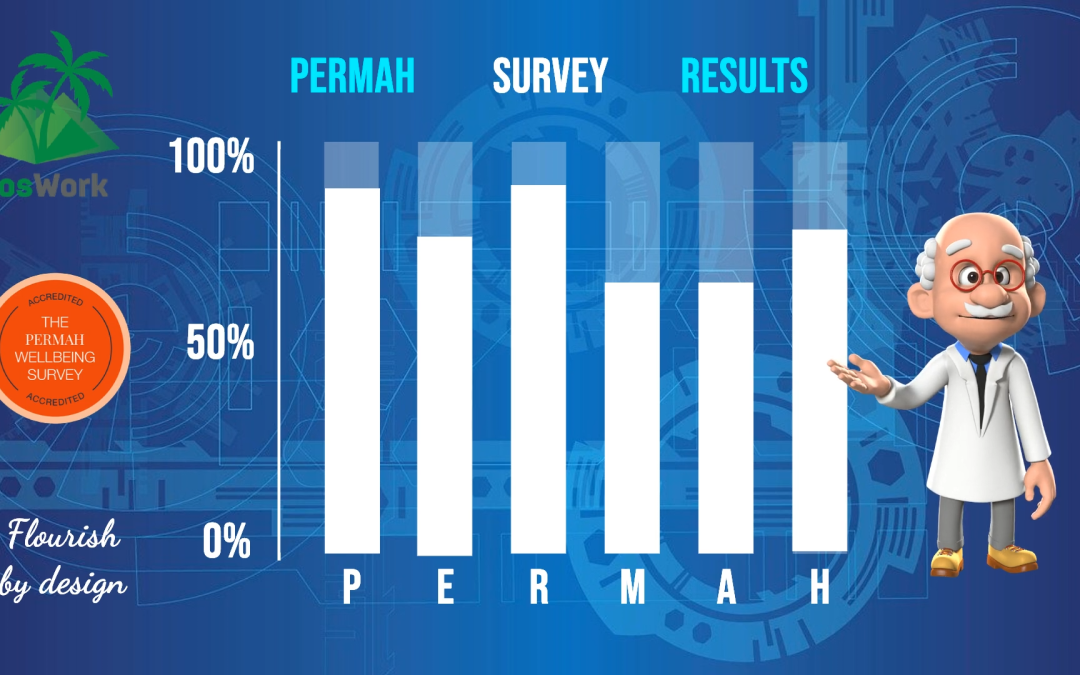
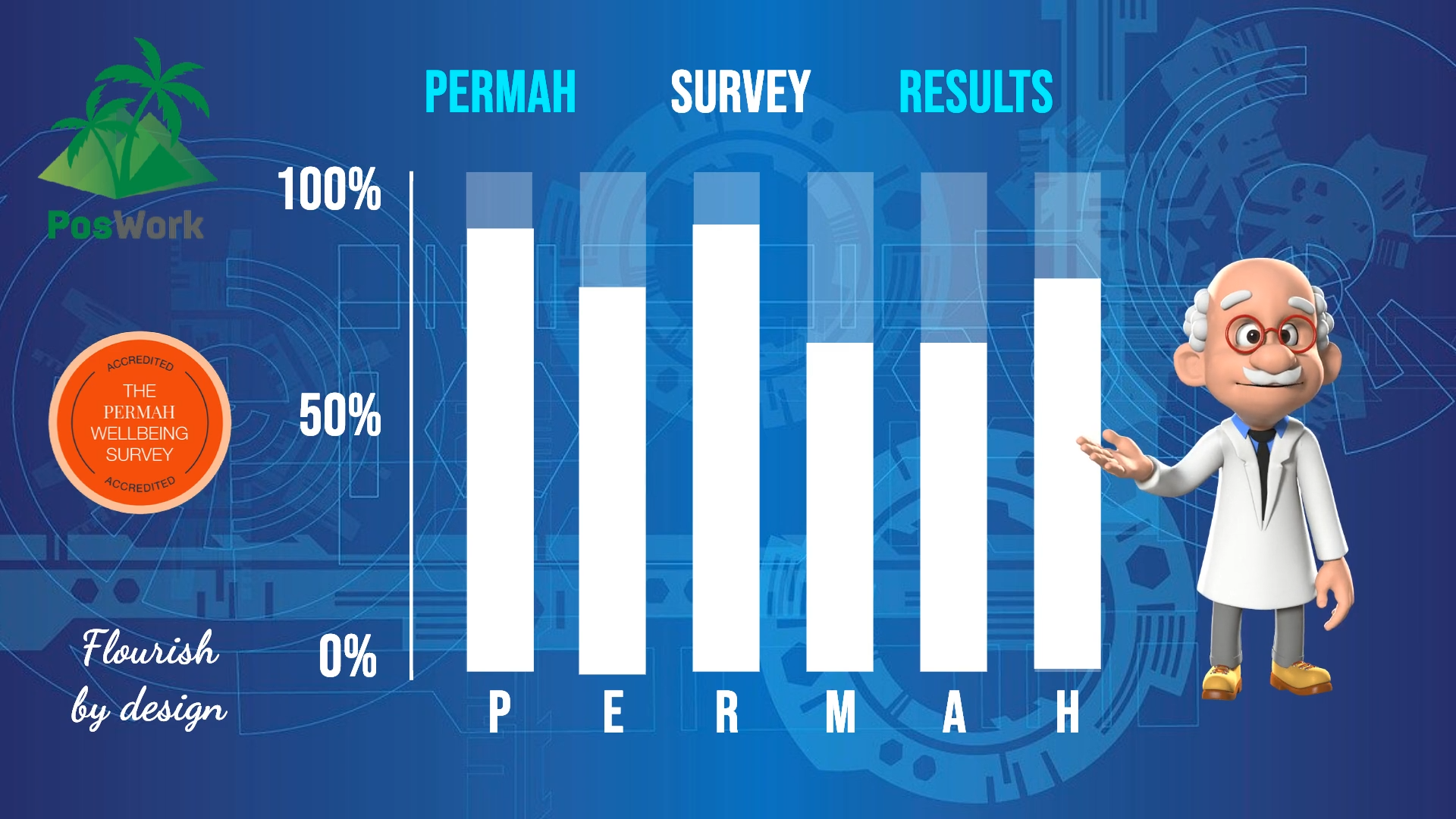
The wonderful team at the Michelle McQuaid Group has done an update for the PERMAH workplace wellbeing survey adding a suite of questions specifically addressing the 14 psychosocial hazards in Safe Work Australia’s “Model code for the management of psychosocial hazards at work”. That means that you can address your positive duties to assess risks and consult your people while giving your business and your people a great platform for improving wellbeing at individual, team and organisational levels.

About PERMAH 

In his celebrated book “Flourish”, Professor Martin Seligman, a world leader in the field of positive psychology and wellbeing theory, set out the PERMA model for wellbeing as “a practical guide to using positive psychology to make you happier and healthier”. Other positive psychologists subsequently added an “H” for “Health” to his model with his endorsement.

The 6 pillars of wellbeing in PERMAH (as described by Dr Michelle McQuaid in the context of  workplace wellbeing) are:

POSITIVE EMOTIONS: such as joy and hope have been found to have a significant effect on our wellbeing. Researchers suggest that experiencing positive emotions broadens your outlook, helps you to build creativity and resourcefulness and to be more resilient and successful.

ENGAGEMENT: being able to use and develop your strengths at work – those things you are good at and enjoy doing – has been found to boost your confidence, engagement and energy at work.

RELATIONSHIPS: creating genuine connection with others at work can give you satisfaction and enrichment. Researchers suggest that it can also lower your levels of stress, improve your concentration and help advance your career.

MEANING: understanding how what you do at work makes a positive difference to others has been found to increase your wellbeing motivation, commitment and sense of satisfaction at work.

ACCOMPLISHMENT: cultivating grit has been found to give you the determination to pursue your goals and having a “growth mindset” can help you learn and grow from setbacks and challenges to achieve your true potential.

HEALTH: staying healthy by eating well, moving regularly and sleeping deeply has been found to build a solid foundation for your wellbeing.

Source: https://www.michellemcquaid.com/ 

PERMAH and psychosocial hazards

One of the central tenets of Professor Seligman’s work is the recognition that we all have our struggles in life but that doesn’t mean that we cannot flourish. If we work on our wellbeing with a positive mindset, we can equip ourselves to deal with our struggles more proactively and productively.

The positive duty that is being imposed through State and Territory legislation on Australian workplaces is also requiring “Persons Conducting a Business or Undertaking” to be proactive in conducting risk assessments and putting in place appropriate measures to eliminate or mitigate/control any risks arising from psychosocial hazards. 

As noted in the preamble, part of the positive duty is also to consult your people about psychosocial hazards.

There are  clear links between the psychology underpinning PERMAH and the positive duty as well as between  the content of the PERMAH pillars and the prescribed psychosocial hazards.

The addition of the suite of survey questions on the psychosocial hazards just adds to the relevance and effectiveness of the PERMAH survey as a tool for measuring wellbeing and workplace risk and building cost effective risk controls based on real data provided by your own workforce.

The other bonus with the PERMAH workplace wellbeing survey is that every employee who does the survey gets their own personal report on where they sit against the 6 PERMAH pillars, a template for putting together their own personal wellbeing plan and access to a stack of resources that they can use to explore and improve their personal wellbeing. 

So there are lots of reasons why we use and recommend the PERMAH workplace wellbeing survey with the psychosocial panel add-on as a great place to start the process of meeting your positive duty to eliminate or control psychosocial hazards in your workplace.

PosWork Practice leader Peter Maguire is accredited to debrief on the PERMAH Workplace Wellbeing Survey with the Psychosocial Panel add-on. If you would like to learn more about how we might be able to assist you in the areas of workplace wellbeing and management of psychosocial hazards, please call us on 0438 533 311 or email info@poswork.com.au.

CONTACT US

PosWork

A Division of Ridgeline Human Resources Pty Ltd
ABN : 24 091 644 094

info@poswork.com.au

0438 533 311

LET'S HAVE A CHAT

Gallup tells us how to engage employees in 2024

Gallup tells us how to engage employees in 2024

Blogs and Stories

Gallup tells us how to engage employees in 2024

meeting

Gallup has released a “2024 Employee Engagement Strategy Checklist” in which it tells us that 44% of employees worldwide say they are stressed and proposes some things that organisations can do to get people more engaged and less stressed. 

Here is Gallup’s list:

  1. Check in on your managers because they are more likely to be feeling burned out and stressed and you need them to feel supported and capable of leading their people effectively.
  2. Prepare managers to have meaningful conversations with employees in which they recognise strengths and achievements, set and refine goals and priorities and support then in relationships and collaboration.
  3. Prioritise promoting vision and purpose, especially among remote workers for whom Gallup’s research says that only 28% feel connected to their organisation’s mission and purpose.
  4. Measure engagement to show employees that you care about their feedback and want to know how they are doing.
  5. Take action on survey results – nothing builds positive momentum for an engagement initiative more than asking for feedback, doing something about it and sharing and celebrating positive results.

They say that their research shows that 80% of employees who say they have received meaningful feedback in the past week are fully engaged, regardless of how many days they worked in the office.

When it comes to having meaningful conversations with employees, Gallup said that they should include:

  1. Recognition or appreciation of recent work
  2. Collaboration and relationships
  3. Current goals and priorities at work
  4. Employee strengths and the things that they do well

How long should these conversations be? If they are done regularly (ie weekly), they should take no longer than 15 to 30 minutes.

Our EngageMentality Model

This is a continuous coaching model which incorporates all of the features that Gallup recommends plus more.

We did our own research on the things that we believe impact on an employment experience and by extension employee engagement and wellbeing – these “coaching lenses” are:

  1. Roles  – the job that I do plus any of those other responsibilities that I might take on as a leader or an employee or safety representative or first aider, etc
  2. Relationships – I rely on certain people for certain things and others rely on me for certain things
  3. Values and behaviours – the behavioural attributes that we want to see practised in our organisation to make it respectful, inclusive and high performing
  4. Strengths – using the VIA Character Strengths framework to use a strengths-based approach which optimises opportunities for me to use my signature strengths and to work on and be supported with my lesser strengths
  5. Wellbeing – using the PERMAH workplace wellbeing survey, build on my psychological safety, life balance and overall wellbeing. 

We explore and address each of those items through a process of:

  1. Positioning – doing a stocktake of where I sit in each of those areas
  2. Planning – identifying the actions that I want to take for my performance and development, timelines for doing that and supports that I need and any people who are involved
  3. Performing – implementing my plan and catching up with my manager each week for a coaching session
  4. Presenting – providing me with the opportunity to showcase my achievements in performance and development and areas for further development 

The coaching conversations simply involve asking and answering these 4 questions in the context of each of the 5 coaching lenses:

  1. What has worked well (celebrate)?
  2. What has been a struggle (recalibrate)?
  3. What has changed (update)?
  4. What are we going to do about all of that (activate)?

If you would like to explore our EngageMentality process or any other of our PosWork programs for your workplace, please call us on 0438 533 311 or email info@poswork.com.au.

CONTACT US

PosWork

A Division of Ridgeline Human Resources Pty Ltd
ABN : 24 091 644 094

info@poswork.com.au

0438 533 311

LET'S HAVE A CHAT

Upgrade empathy to compassion

Upgrade empathy to compassion

Blogs and Stories

Upgrade empathy to compassion

meeting

We hear a lot about empathy being an essential quality for good leadership, right? It is a nice sentiment that a leader can put themselves in another’s shoes and see the world or an issue from their perspective, right? But is that enough?

Let’s start with the basics – what is empathy? Empathy is our feeling of awareness toward other people’s emotions and an attempt to understand how they feel.

It doesn’t mean that, even if you can put yourself in that other person’s shoes, you are going to do anything about it.

For example, I could see someone being humiliated by their boss and I could imagine how that might make them feel ie I might empathise with their situation. Is that where my responsibility ends or is there something more?

Of course, there is more if I am not just going to be another bystander – I need to want to help.

That is where compassion is a step up from empathy. Compassion is an emotional response to empathy or sympathy and creates a desire to help.  I empathise with the person and their situation and then I take action to help.

Compassionate leaders not only understand the emotions of their people but actively listen to them and seek solutions to support them and to  alleviate their struggles.

On the other hand, empathy alone may fall short in driving tangible change. Leaders who solely rely on empathy might find themselves navigating the emotional complexities of their team without necessarily addressing underlying issues.

While empathy creates a connection, compassion propels leaders to make a meaningful impact. Effective leadership requires a delicate balance between understanding the emotions of others and taking decisive actions to enhance the collective well-being. Leaders who blend empathy with compassion create an environment that values both emotional understanding and proactive problem-solving, both key components of psychologically safe workplaces.

Interested in learning more about how we can help you to learn about compassionate leadership? Call us on 0438 533 311 or email info@poswork.com.au.


CONTACT US

PosWork

A Division of Ridgeline Human Resources Pty Ltd
ABN : 24 091 644 094

info@poswork.com.au

0438 533 311

LET'S HAVE A CHAT

Turning positive duties into positives

Turning positive duties into positives

Blogs and Stories

Turning positive duties into positives

meeting

The introduction of positive duties for the elimination of sexual harassment and psychosocial hazards does represent a step up in employer’s obligations and, if you just look at such things from a risk management perspective, you will see them that way.

And one of the problems that that traditional approach to risk management creates is that it is just about fixing problems rather than optimising solutions.

But what happens if you flip the narrative from just a deficit approach (what risks do we have?) to a strengths-based approach ( what are we doing well and what can we do better?)?

For example, try swapping:

  • “Unreasonable job demands” for “What do reasonable job demands look like for us, what are we doing well here and how can we get better?” and
  • “Inadequate reward and recognition” for “What are the ways that we recognise and reward our people, what’s working well and what can we do better?” and
  • “Violence and aggressive behaviour” for “We know our people encounter violent and aggressive behaviours in the course of their work – what are we doing to prepare them for that and to support them in dealing with that hazard, what is working well and what can we do better?”

Taking that balanced approach really changes the mindset and the conversation as well as being a much more effective way to build a psychologically safe work culture built on open communication, a shared commitment to continuous improvement and trust.

That’s what our Better Workplace Projects are all about and it is one way how we can help your workplace to deal with your positive duty in a positive way.

If that has you interested, call us on 0438 533 311 or email info@poswork.com.au to book your free first consultation.


CONTACT US

PosWork

A Division of Ridgeline Human Resources Pty Ltd
ABN : 24 091 644 094

info@poswork.com.au

0438 533 311

LET'S HAVE A CHAT