Use PERMAH for your positive duty

Use PERMAH for your positive duty

Blogs and Stories

Use PERMAH for your positive duty

meeting

The wonderful team at the Michelle McQuaid Group has done an update for the PERMAH workplace wellbeing survey adding a suite of questions specifically addressing the 14 psychosocial hazards in Safe Work Australia’s “Model code for the management of psychosocial hazards at work”. That means that you can address your positive duties to assess risks and consult your people while giving your business and your people a great platform for improving wellbeing at individual, team and organisational levels.

About PERMAH 

In his celebrated book “Flourish”, Professor Martin Seligman, a world leader in the field of positive psychology and wellbeing theory, set out the PERMA model for wellbeing as “a practical guide to using positive psychology to make you happier and healthier”. Other positive psychologists subsequently added an “H” for “Health” to his model with his endorsement.

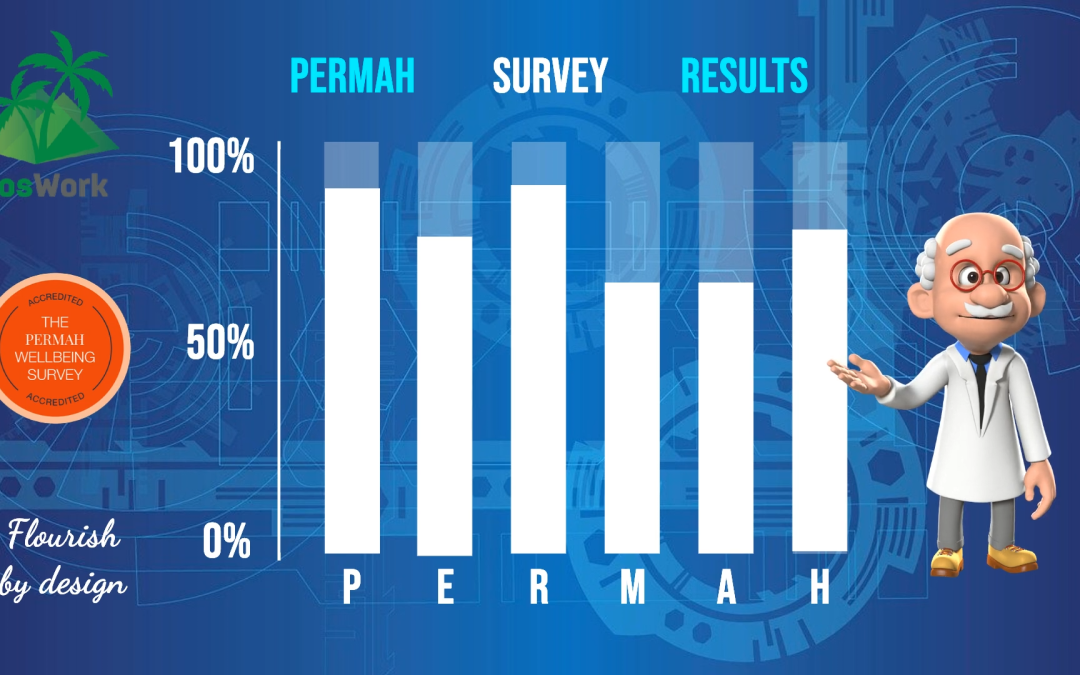
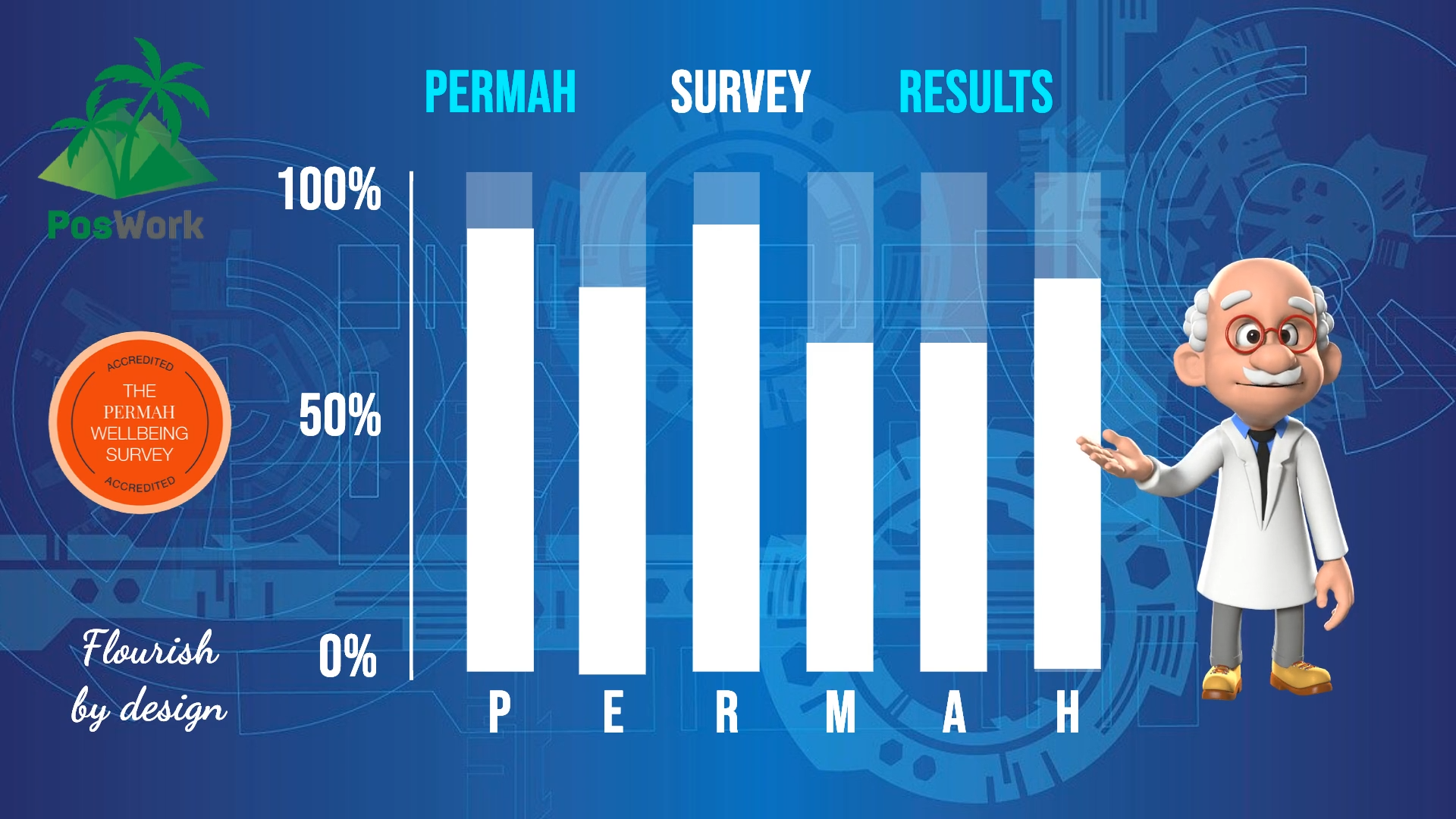
The 6 pillars of wellbeing in PERMAH (as described by Dr Michelle McQuaid in the context of  workplace wellbeing) are:

POSITIVE EMOTIONS: such as joy and hope have been found to have a significant effect on our wellbeing. Researchers suggest that experiencing positive emotions broadens your outlook, helps you to build creativity and resourcefulness and to be more resilient and successful.

ENGAGEMENT: being able to use and develop your strengths at work – those things you are good at and enjoy doing – has been found to boost your confidence, engagement and energy at work.

RELATIONSHIPS: creating genuine connection with others at work can give you satisfaction and enrichment. Researchers suggest that it can also lower your levels of stress, improve your concentration and help advance your career.

MEANING: understanding how what you do at work makes a positive difference to others has been found to increase your wellbeing motivation, commitment and sense of satisfaction at work.

ACCOMPLISHMENT: cultivating grit has been found to give you the determination to pursue your goals and having a “growth mindset” can help you learn and grow from setbacks and challenges to achieve your true potential.

HEALTH: staying healthy by eating well, moving regularly and sleeping deeply has been found to build a solid foundation for your wellbeing.

Source: https://www.michellemcquaid.com/ 

PERMAH and psychosocial hazards

One of the central tenets of Professor Seligman’s work is the recognition that we all have our struggles in life but that doesn’t mean that we cannot flourish. If we work on our wellbeing with a positive mindset, we can equip ourselves to deal with our struggles more proactively and productively.

The positive duty that is being imposed through State and Territory legislation on Australian workplaces is also requiring “Persons Conducting a Business or Undertaking” to be proactive in conducting risk assessments and putting in place appropriate measures to eliminate or mitigate/control any risks arising from psychosocial hazards. 

As noted in the preamble, part of the positive duty is also to consult your people about psychosocial hazards.

There are  clear links between the psychology underpinning PERMAH and the positive duty as well as between  the content of the PERMAH pillars and the prescribed psychosocial hazards.

The addition of the suite of survey questions on the psychosocial hazards just adds to the relevance and effectiveness of the PERMAH survey as a tool for measuring wellbeing and workplace risk and building cost effective risk controls based on real data provided by your own workforce.

The other bonus with the PERMAH workplace wellbeing survey is that every employee who does the survey gets their own personal report on where they sit against the 6 PERMAH pillars, a template for putting together their own personal wellbeing plan and access to a stack of resources that they can use to explore and improve their personal wellbeing. 

So there are lots of reasons why we use and recommend the PERMAH workplace wellbeing survey with the psychosocial panel add-on as a great place to start the process of meeting your positive duty to eliminate or control psychosocial hazards in your workplace.

PosWork Practice leader Peter Maguire is accredited to debrief on the PERMAH Workplace Wellbeing Survey with the Psychosocial Panel add-on. If you would like to learn more about how we might be able to assist you in the areas of workplace wellbeing and management of psychosocial hazards, please call us on 0438 533 311 or email info@poswork.com.au.

CONTACT US

PosWork

A Division of Ridgeline Human Resources Pty Ltd
ABN : 24 091 644 094

info@poswork.com.au

0438 533 311

LET'S HAVE A CHAT

Gallup tells us how to engage employees in 2024

Gallup tells us how to engage employees in 2024

Blogs and Stories

Gallup tells us how to engage employees in 2024

meeting

Gallup has released a “2024 Employee Engagement Strategy Checklist” in which it tells us that 44% of employees worldwide say they are stressed and proposes some things that organisations can do to get people more engaged and less stressed. 

Here is Gallup’s list:

  1. Check in on your managers because they are more likely to be feeling burned out and stressed and you need them to feel supported and capable of leading their people effectively.
  2. Prepare managers to have meaningful conversations with employees in which they recognise strengths and achievements, set and refine goals and priorities and support then in relationships and collaboration.
  3. Prioritise promoting vision and purpose, especially among remote workers for whom Gallup’s research says that only 28% feel connected to their organisation’s mission and purpose.
  4. Measure engagement to show employees that you care about their feedback and want to know how they are doing.
  5. Take action on survey results – nothing builds positive momentum for an engagement initiative more than asking for feedback, doing something about it and sharing and celebrating positive results.

They say that their research shows that 80% of employees who say they have received meaningful feedback in the past week are fully engaged, regardless of how many days they worked in the office.

When it comes to having meaningful conversations with employees, Gallup said that they should include:

  1. Recognition or appreciation of recent work
  2. Collaboration and relationships
  3. Current goals and priorities at work
  4. Employee strengths and the things that they do well

How long should these conversations be? If they are done regularly (ie weekly), they should take no longer than 15 to 30 minutes.

Our EngageMentality Model

This is a continuous coaching model which incorporates all of the features that Gallup recommends plus more.

We did our own research on the things that we believe impact on an employment experience and by extension employee engagement and wellbeing – these “coaching lenses” are:

  1. Roles  – the job that I do plus any of those other responsibilities that I might take on as a leader or an employee or safety representative or first aider, etc
  2. Relationships – I rely on certain people for certain things and others rely on me for certain things
  3. Values and behaviours – the behavioural attributes that we want to see practised in our organisation to make it respectful, inclusive and high performing
  4. Strengths – using the VIA Character Strengths framework to use a strengths-based approach which optimises opportunities for me to use my signature strengths and to work on and be supported with my lesser strengths
  5. Wellbeing – using the PERMAH workplace wellbeing survey, build on my psychological safety, life balance and overall wellbeing. 

We explore and address each of those items through a process of:

  1. Positioning – doing a stocktake of where I sit in each of those areas
  2. Planning – identifying the actions that I want to take for my performance and development, timelines for doing that and supports that I need and any people who are involved
  3. Performing – implementing my plan and catching up with my manager each week for a coaching session
  4. Presenting – providing me with the opportunity to showcase my achievements in performance and development and areas for further development 

The coaching conversations simply involve asking and answering these 4 questions in the context of each of the 5 coaching lenses:

  1. What has worked well (celebrate)?
  2. What has been a struggle (recalibrate)?
  3. What has changed (update)?
  4. What are we going to do about all of that (activate)?

If you would like to explore our EngageMentality process or any other of our PosWork programs for your workplace, please call us on 0438 533 311 or email info@poswork.com.au.

CONTACT US

PosWork

A Division of Ridgeline Human Resources Pty Ltd
ABN : 24 091 644 094

info@poswork.com.au

0438 533 311

LET'S HAVE A CHAT

Upgrade empathy to compassion

Upgrade empathy to compassion

Blogs and Stories

Upgrade empathy to compassion

meeting

We hear a lot about empathy being an essential quality for good leadership, right? It is a nice sentiment that a leader can put themselves in another’s shoes and see the world or an issue from their perspective, right? But is that enough?

Let’s start with the basics – what is empathy? Empathy is our feeling of awareness toward other people’s emotions and an attempt to understand how they feel.

It doesn’t mean that, even if you can put yourself in that other person’s shoes, you are going to do anything about it.

For example, I could see someone being humiliated by their boss and I could imagine how that might make them feel ie I might empathise with their situation. Is that where my responsibility ends or is there something more?

Of course, there is more if I am not just going to be another bystander – I need to want to help.

That is where compassion is a step up from empathy. Compassion is an emotional response to empathy or sympathy and creates a desire to help.  I empathise with the person and their situation and then I take action to help.

Compassionate leaders not only understand the emotions of their people but actively listen to them and seek solutions to support them and to  alleviate their struggles.

On the other hand, empathy alone may fall short in driving tangible change. Leaders who solely rely on empathy might find themselves navigating the emotional complexities of their team without necessarily addressing underlying issues.

While empathy creates a connection, compassion propels leaders to make a meaningful impact. Effective leadership requires a delicate balance between understanding the emotions of others and taking decisive actions to enhance the collective well-being. Leaders who blend empathy with compassion create an environment that values both emotional understanding and proactive problem-solving, both key components of psychologically safe workplaces.

Interested in learning more about how we can help you to learn about compassionate leadership? Call us on 0438 533 311 or email info@poswork.com.au.


CONTACT US

PosWork

A Division of Ridgeline Human Resources Pty Ltd
ABN : 24 091 644 094

info@poswork.com.au

0438 533 311

LET'S HAVE A CHAT

Turning positive duties into positives

Turning positive duties into positives

Blogs and Stories

Turning positive duties into positives

meeting

The introduction of positive duties for the elimination of sexual harassment and psychosocial hazards does represent a step up in employer’s obligations and, if you just look at such things from a risk management perspective, you will see them that way.

And one of the problems that that traditional approach to risk management creates is that it is just about fixing problems rather than optimising solutions.

But what happens if you flip the narrative from just a deficit approach (what risks do we have?) to a strengths-based approach ( what are we doing well and what can we do better?)?

For example, try swapping:

  • “Unreasonable job demands” for “What do reasonable job demands look like for us, what are we doing well here and how can we get better?” and
  • “Inadequate reward and recognition” for “What are the ways that we recognise and reward our people, what’s working well and what can we do better?” and
  • “Violence and aggressive behaviour” for “We know our people encounter violent and aggressive behaviours in the course of their work – what are we doing to prepare them for that and to support them in dealing with that hazard, what is working well and what can we do better?”

Taking that balanced approach really changes the mindset and the conversation as well as being a much more effective way to build a psychologically safe work culture built on open communication, a shared commitment to continuous improvement and trust.

That’s what our Better Workplace Projects are all about and it is one way how we can help your workplace to deal with your positive duty in a positive way.

If that has you interested, call us on 0438 533 311 or email info@poswork.com.au to book your free first consultation.


CONTACT US

PosWork

A Division of Ridgeline Human Resources Pty Ltd
ABN : 24 091 644 094

info@poswork.com.au

0438 533 311

LET'S HAVE A CHAT

Reflections on the Strength of Love

Reflections on the Strength of Love

Blogs and Stories

Reflections on the Strength of Love

chalk writing choose direction

Love is one of the three character strengths that comprise the Virtue of Humanity.

Humanity describes strengths that manifest in caring relationships with others. These strengths are interpersonal and are mostly relevant in one-on-one relationships.

What is love?

Love as a character strength, rather than as an emotion, refers to the degree to which you value close relationships with people, and contribute to that closeness in a warm and genuine way. 

Where kindness can be a behavioural pattern applied in any relationship, love as a character strength really refers to the way you approach your closest and warmest relationships. 

Love is reciprocal, referring to both loving others and the willingness to accept love from others. 

There are four types of love, each with a biological and evolutionary base:

  • Attachment love: parent for child; child for parent
  • Compassionate/altruistic love: kindness
  • Companionate love: friendship
  • Romantic love: spouse/partner/boyfriend/girlfriend

Why is love of value?

  • Love tends to facilitate tolerance, empathy and forgiveness in relationships which contribute to the health and longevity of those relationships.
  • Loving and secure relationships can provide a sense of meaning and purpose in life.
  • Love is associated with healthy patterns of communication such as compromise and the ability to engage effectively in conflict with others.

A couple of questions to consider

  • What are the ways in which you express love to others and how is it received?
  • How well do you receive love? It is often harder to give than to receive but good relationships are a two-way street. Do signs of love make you uncomfortable or afraid of what others may expect from you

Some things that you can do to practise love

  • Journal about loving relationships in general, reflecting on what is most valued in a healthy, loving relationship. Put one of your insights into action.
  • Carve out some time each week to experience uninterrupted quality time in your closest relationship.
  • Go out of your way to offer support to co-workers when you see they are stressed or having a bad day. Give them the gift of supportive words and your honest concern. 

For more information on the strength of hope, go to https://www.viacharacter.org/character-strengths/love

If you are interested in exploring how the practice of Character Strengths might be of benefit to your business and culture, contact Peter Maguire on 0438 533 311 or at info@poswork.com.au.

Acknowledgement: the primary reference for this post is “The Power of Character Strengths: Appreciate And Ignite Your Positive Personality” by Ryan M. Niemiec & Robert E. McGrath (An Official Guide From The VIA Institute on Character)

CONTACT US

PosWork

A Division of Ridgeline Human Resources Pty Ltd
ABN : 24 091 644 094

info@poswork.com.au

0438 533 311

LET'S HAVE A CHAT

Perspectives on the Strength of Fairness

Perspectives on the Strength of Fairness

Blogs and Stories

Perspectives on the Strength of Fairness

chalk writing choose direction

Fairness is one of the three character strengths that comprise the Virtue of Justice.

Justice describes strengths that help you connect in community or group-based situations.

What is fairness?

Fairness is treating people justly, not letting your personal feelings bias your decisions about others. You want to give everyone a fair chance, and believe there should be equal opportunity for all, though you also realize that what is fair for one person might not be fair for another.

Fairness is a cognitive judgment capacity that involves reasoning and making judgments. It involves 2 types of reasoning:

  • Justice reasoning which emphasizes logic and weighing principles to determine moral rights and responsibilities.
  • Care reasoning which includes empathy and compassion; the ability to put yourself in somebody else’s shoes.

When you are at your best, you use fairness to actively work to establish equity and respect for all.

Why is fairness of value?

  • Fair-minded individuals are more likely to engage in positive, prosocial behaviours and less likely to engage in illegal and immoral behaviours.
  • A sensitivity to issues of morality and justice increases self-reflection and self-knowledge.
  • Having a good moral compass enables you to navigate conflictual situations more effectively.

A couple of questions to consider

  • What are the circumstances in which it is easier or harder for you to compromise to try to achieve a fair outcome for everyone?
  • How do you reconcile your sense of fairness with the reality that “life is not fair”?

Some things that you can do to practise fairness

  • Consider ways to be fairer with friends or family such as thinking about the amount of quality time you spend with each person and making adjustments accordingly. 
  • Include someone in a conversation who is as newcomer or typically excluded from groups.
  • Be fair to yourself by examining the amount of time you spend on your own health and self-care versus time spent on helping others. Take action based on what is fair for both you and others.

For more information on the strength of fairness, go to https://www.viacharacter.org/character-strengths/fairness

If you are interested in exploring how the practice of Character Strengths might be of benefit to your business and culture, contact Peter Maguire on 0438 533 311 or at info@poswork.com.au.

Acknowledgement: the primary reference for this post is “The Power of Character Strengths: Appreciate And Ignite Your Positive Personality” by Ryan M. Niemiec & Robert E. McGrath (An Official Guide From The VIA Institute on Character)

CONTACT US

PosWork

A Division of Ridgeline Human Resources Pty Ltd
ABN : 24 091 644 094

info@poswork.com.au

0438 533 311

LET'S HAVE A CHAT