A recipe for resilience

A recipe for resilience

Blogs and Stories

A recipe for resilience

meeting

One of the key findings from the aggregated research on workplace wellbeing that The Australian Human Resources Institute in conjunction with the Michelle McQuaid Group and others undertook from 2018 to 2023 was that there was a significant downturn in resilience in Australian workplaces. So how do you tackle that in your workplace?

There are lots of wonderful positive psychology-based tools that are freely available for us to use in our efforts to improve wellbeing in work and otherwise in life.

While each of these can be highly effective tools in their own right, sometimes you get an even more powerful result from using them in partnership.

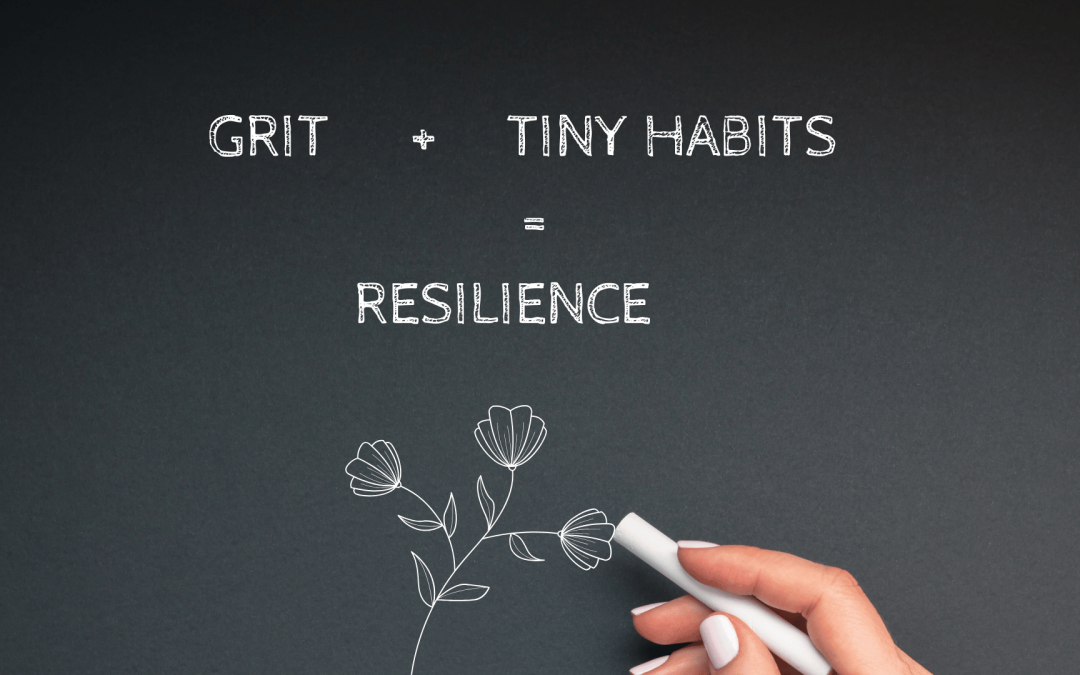
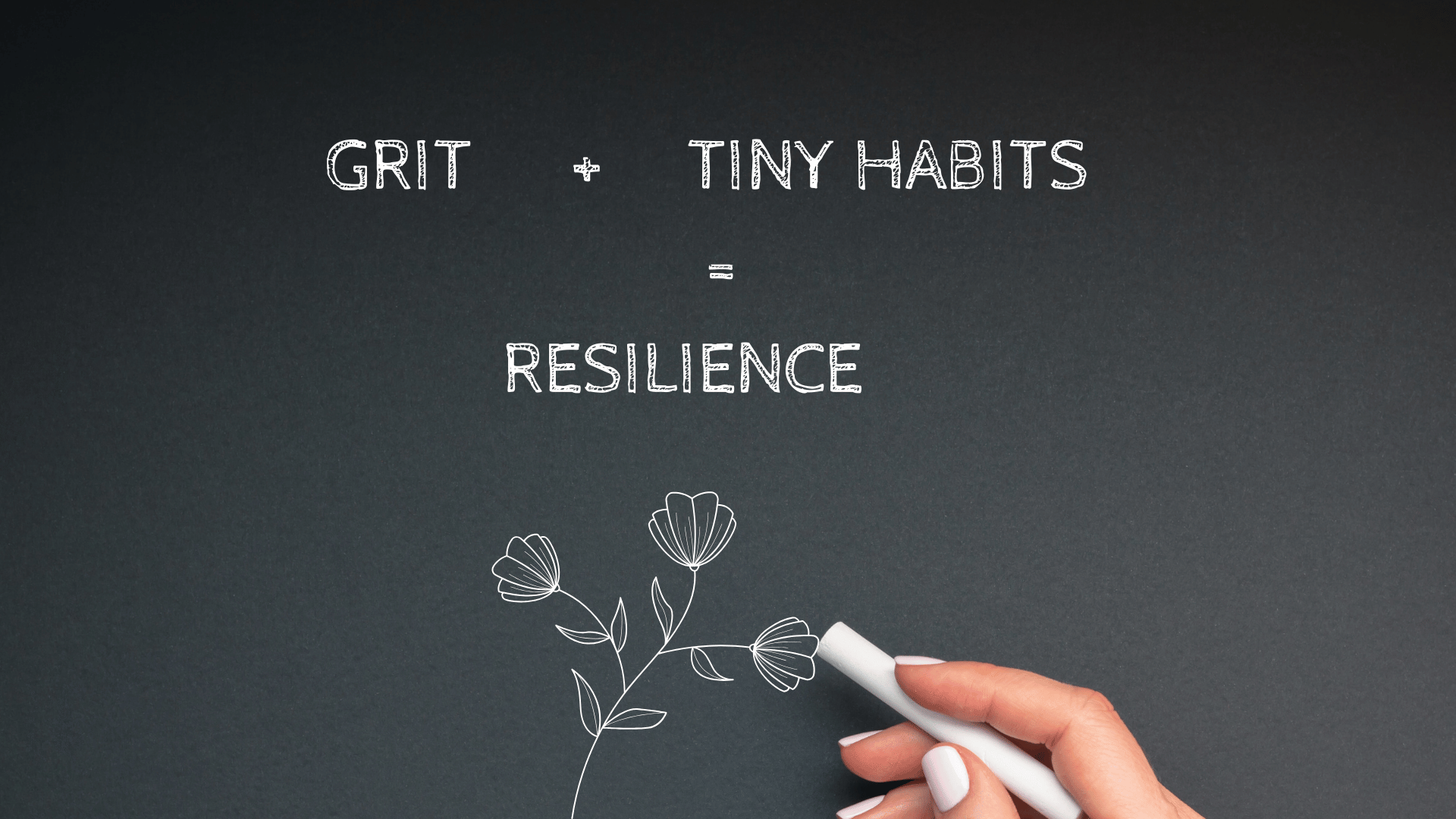
In that context, Angela Duckworth’s Grit Theory and BJ Fogg’s Tiny Habits provide a really powerful combination as a “recipe for resilience”. By merging the passion and perseverance of grit with the incremental power of tiny habits, we can forge a path towards lasting resilience through positive thinking and consistent, small victories.

Understanding Grit, Passion and Perseverance

Angela Duckworth, in her groundbreaking research, defines grit as the tendency to sustain interest in and effort toward very long-term goals. It’s not just about talent or intelligence; it’s about having an enduring commitment to your passions and pushing through obstacles. Gritty individuals view setbacks not as failures, but as opportunities to learn and adapt. This inherent optimism fuels their ability to persevere.

The core components of grit are:

  • Passion: Having a deep, sustained interest in a particular area. It’s what keeps you engaged even when things get tough.
  • Perseverance: The ability to keep working hard and stay committed to your goals, despite challenges, failures, and plateaus.

Duckworth emphasizes that grit can be developed. It’s a muscle that strengthens with consistent exercise. But how do we consistently exercise it, especially when facing daunting challenges? This is where BJ Fogg’s Tiny Habits come into play.

The Power of Tiny Habits: Incremental Wins

BJ Fogg, a Stanford University researcher, revolutionized our understanding of behavior change with his Tiny Habits method. Fogg argues that to create lasting change, we shouldn’t aim for monumental shifts. Instead, we should start with behaviors so small and easy that they’re almost impossible to resist.

The Tiny Habits method follows a simple formula: Anchor + Tiny Behavior + Celebration = Habit.

  • Anchor: An existing routine or event in your day (e.g., brushing your teeth, finishing a meeting).
  • Tiny Behavior: The new little behavioural change that you want to cultivate (e.g., after brushing your teeth, do one push-up).
  • Celebration: A quick, genuine feeling of success (e.g., “Yes!”, a fist pump, a smile) or a reward. This positive reinforcement wires the behavior into your brain.

The magic of Tiny Habits lies in these incremental wins. Each successful repetition, no matter how small, builds momentum and commitment. It’s a continuous feedback loop that fosters positive thinking by proving to yourself, repeatedly, that you are capable of achieving your goals.

Building Resilience: A Synergistic Approach

Now, let’s weave these two powerful theories together to build resilience.

  1. Identify Your Passion (Grit): Start by clarifying your long-term goals and the passions that drive you. What truly excites you? What do you want to achieve that requires sustained effort? This forms the bedrock of your gritty pursuit.
  2. Break Down Goals into Tiny Behaviors (Tiny Habits): Once your long-term vision is clear, dissect it into the smallest possible, actionable steps. If your goal is to write a book, a tiny habit might be “After I finish my morning coffee, I will write one sentence.” If it’s to get fit, it could be “After I tie my shoelaces, I will do one squat.”
  3. Attach to an Anchor and Celebrate (Tiny Habits): Consistently link your tiny behavior to an existing routine and always, always celebrate your success. This positive reinforcement, even for the smallest achievement, reinforces the behavior and builds positive thinking. You’re training your brain to associate effort with reward.
  4. Embrace Incremental Wins for Perseverance (Grit & Tiny Habits): Each tiny behavior completed is an incremental win. These small victories accumulate, building self-confidence and demonstrating that progress is happening. This continuous stream of positive reinforcement strengthens your perseverance muscle. When setbacks occur (and they will), your history of small wins reminds you of your capability to keep going.

If you would like to explore ways that we can help you to build resilience practice or with any other of our PosWork programs for your workplace, please call us on 0438 533 311 or email info@poswork.com.au.

CONTACT US

PosWork

A Division of Ridgeline Human Resources Pty Ltd
ABN : 24 091 644 094

info@poswork.com.au

0438 533 311

LET'S HAVE A CHAT

Delivering positive change with HEART

Delivering positive change with HEART

Blogs and Stories

Delivering positive change with HEART

Change management invariably comes up as one of those key areas for improvement in staff surveys, doesn’t it?

And now that “poor change management” is one of the prescribed psychosocial hazards, that further shines a light on it, especially given that studies show it to be one of the more prevalent of those hazards in Australian workplaces.

And now we also have these new positive duties to eliminate or control psychosocial hazards and to prevent sexual harassment and gender-based behaviour.

That means that we should be doing things differently to the way we have before, doesn’t it?

The regulators’ approach

The authorities are regulating these positive duties through the workplace heath and safety lens using the traditional risk management model that has been applied to physical workplace health and safety hazards……..which means that we are not going to be doing things differently at all. We already had those obligations to undertake risk assessments and put in place control measures.

Sure we need to do that but is that all that the positive duty should require? I don’t think so.

Why? Because it won’t work – in fact, the introduction of the positive duty regime is arguably an admission that the standard risk control model hasn’t worked when it comes to psychosocial hazards.

Have a HEART

I came to that conclusion 15 years ago – that traditional compliance processes were not effective in delivering necessary changes in workplace behaviours to provide psychologically safe and gender-inclusive workplaces.

I could see the damage being done to people, trust and engagement as well as productivity through risk driven blame cultures – investigate > find fault > punish. We needed to be more humane in dealing with human challenges.

Additionally, study after study has shown that employee engagement levels of employees have stayed much the same for years – roughly a third engaged, a third not engaged and a third actively disengaged. Clearly, we weren’t making progress there either.

I had also had the good fortune to be exposed to best practices in leadership and culture through my work as an Investors in People assessor.

All of that led me to explore positive psychology and to purpose build a new suite of interventions to help organisations to deal positively with change and the cultural transformations needed to enhance engagement, productivity and wellbeing in our workplaces.

One of those is our HEART change model which was designed with the benefit of over 45 years working in the People and Culture field, 30 years working with hundreds of organisations as a consultant and all of the lessons on change management (good and bad) that I had along the way.

Here is how it works.

H is for HONESTY:

There are 2 components to this. Firstly, accept your obligations as an employer, learn what you need to do and commit to it. Then, take a good hard look at your workplace through our four Ps (your policies, your practices, your processes and your people) to identify both strengths that you can leverage and weaknesses that you need to address.

E is for ENGAGEMENT:

Educate your people and give them a voice. Really engage everyone in the organisation in the conversation through a representative group (we call them “Better Workplace Teams”) which acts as a collaborative management vehicle to manage the change process. Also have the conversations with those people who have been identified as risks and support them in areas that they need to work on and don’t permit exceptions.

A is for ACCOUNTABILITY:

Hold everyone accountable for playing their part in the desired culture ensuring that the principles are applied to all individuals and teams and with no bystanders. Where improvements are needed for anyone, make that a corrective action for them to take on board as part of their performance plan.

R is for REVIEW:

Ensure that there is constant vigilance and that you regularly consult and check in with people to verify what is working  well and where there might be opportunities for improvement. Implement a coaching model which includes regular catch ups and discussion of relationships, values and behaviours – how they are going, what is working well and what could be better.

T is for TRUST:

Create an environment that is psychologically safe for people to put their hands up and seek an ear or a hand with any challenges that they are having – with someone else’s behaviour or their own.  Ensure that you are responsive and people believe in the integrity of both the process and management.

Conclusion

The bottom line is that we need to change both leadership mindsets and organisational behaviour if we are going to solve the challenges of employee engagement and wellbeing and workplace productivity.

The HEART way is a good place to start.

CONTACT US

PosWork

A Division of Ridgeline Human Resources Pty Ltd
ABN : 24 091 644 094

info@poswork.com.au

0438 533 311

LET'S HAVE A CHAT

Self-regulation and leadership

Self-regulation and leadership

Blogs and Stories

Self-regulation and leadership

meeting

The character strength of self-regulation is one that plays a significant part in how people are seen as leaders and how they see themselves as leaders. Those who are adept at managing their emotions, thoughts, and behaviours in the face of challenges or stress are positive influences on others and people to whom others turn for guidance and support. That makes for better relationships, better stress management, better decision-making and better outcomes. 

Why Self-Regulation Is Crucial for Leaders

1. Managing emotions:

Humans are emotional beings and leading people can be emotionally challenging especially where there are different views that people hold or where changes are being introduced or difficult decisions need to be made. If a leader lacks the ability for self-regulation, that can translate into negative emotions such as such as anger or frustration which might not only cloud their judgment but also negatively impact on their effectiveness as leaders. By regulating their emotions, leaders can remain calm and objective, fostering confidence among their teams.

2. Building Trust and Respect:

Teams look to their leaders for guidance and stability. They want leaders who they are confident to seek guidance from ie leaders who have their trust and respect. They want to know that their leader will be honest with them, genuinely listen to them and respond fairly and respectfully to them regardless of the issues in question. They also want to see the human in the leader through the emotions that the leader expresses; it isn’t about not expressing emotions – it is about how they are expressed and what you do with them that matters (ie how you regulate them). Leaders who consistently show the right balance with these attributes are perceived as trustworthy and are more effective in managing challenges for teams and individuals. In contrast, erratic or unpredictable behaviours can create uncertainty and lower morale, especially where no constructive action plan flows from recognition of the emotions surrounding the issue in question.

3. Enhances Decision-Making:

Self-regulated leaders approach challenges with a clear and focused mind, enabling them to make thoughtful decisions. They avoid being swayed by temporary emotions or pressures, ensuring decisions are aligned with long-term goals. However, self-regulation is also about applying good practice in inclusion of people through effective consultation processes to ensure people feel like they have a voice and can buy into the decision, even if it isn’t their preferred one. 

4. Promotes Healthy Team Dynamics:

You will have heard the words “Talk the talk!” and “Walk the walk!” Leaders who model self-regulation and live organisational values every day set the tone for the organisation. Their abilities to remain composed in stressful situations and to lead others through them effectively encourages others to do the same, reducing conflict and fostering a collaborative environment.

5. Improves Personal Well-Being:

Self-regulation isn’t just about managing outward behavior; it also helps leaders maintain their own mental and emotional health. By effectively managing stress, leaders can avoid burnout and perform at their best.

Ways Leaders Can Build Self-Regulation

1. Practice Mindfulness:

Mindfulness is a powerful tool for developing self-regulation. By focusing on the present moment and observing thoughts and emotions without judgment, leaders can build greater self-awareness and emotional control. Regular practices such as meditation or deep breathing exercises can help cultivate mindfulness.

2. Develop Emotional Intelligence:

Emotional intelligence (EI) is closely tied to self-regulation. Leaders can enhance EI by actively working on empathy, self-awareness, and social skills. Understanding their own emotional triggers and learning to manage them is a key step in strengthening self-regulation.

3. Set Clear Personal Boundaries:

Establishing boundaries around work and personal time can help leaders manage stress and avoid emotional overwhelm. When leaders prioritize self-care, they are better equipped to regulate their emotions and maintain balance.

4. Seek Feedback:

Constructive feedback from peers, mentors, or team members can provide valuable insights into areas where self-regulation can be improved. Being open to feedback demonstrates humility and a commitment to growth.

5. Practice Delayed Response:

In emotionally charged situations, leaders should pause before responding. Taking a few moments to reflect allows them to consider their words and actions carefully, reducing the likelihood of impulsive reactions.

6. Engage in Physical Activity:

Exercise is an effective way to reduce stress and improve mood. Leaders who maintain a regular fitness routine often find it easier to manage their emotions and remain composed in high-pressure situations.

7. Learn Stress Management Techniques:

Techniques such as journaling, time management, or engaging in hobbies can help leaders manage stress proactively. Finding activities that bring joy and relaxation is critical to maintaining emotional equilibrium.

Conclusion

Self-regulation is a vital skill for leaders who aspire to inspire trust, navigate challenges, and foster healthy team dynamics. By cultivating mindfulness, building emotional intelligence, and adopting stress management techniques, leaders can enhance their ability to stay composed and make thoughtful decisions. In doing so, they not only strengthen their own leadership capabilities but also create a positive and resilient organizational culture. Self-regulation is not just a leadership skill—it’s a leadership superpower.

If you would like to explore the ways that we might be able to help you to make yours a great workplace, please call us on 0438 533 311 or email info@poswork.com.au.

CONTACT US

PosWork

A Division of Ridgeline Human Resources Pty Ltd
ABN : 24 091 644 094

info@poswork.com.au

0438 533 311

LET'S HAVE A CHAT

A character case study

A character case study

A character case study

meeting

I want to share with you one of the most remarkable experiences I have had in my life. 

Over the past few months, I have been a volunteer on a political campaign by a first time independent candidate in our federal election.

It has been inspirational, frustrating, educational, unnerving, exciting, disappointing, challenging, rewarding – yes a real rollercoaster – and so valuable.

Here are my top 5 takes from the journey.

Growth

Our candidate was incredible. Having jumped into the ring (after multiple refusals), she grew and grew and grew with each step that she took and it was both amazing and inspiring to see.

Grounding 

Having that foundation of honest, loving, non-judgmental support through family and key supporters/leadership group provides the confidence to dare to be out there – true psychological and emotional safety and support for the leader who knows that the safety net is there to encourage and support positively and to catch them kindly.

Authenticity

One of the biggest lessons that I thought the candidate learned was quite simply: “be me”. Her signature strengths of hope and kindness were a core ingredient in her campaign. Those strengths resonated with people because they are in her essence (ie they could see the authentic her) and starkly contrasted with the political behaviours we are used to. That was really powerful.

Diversity

In any political campaign, there is a massive amount of work to be done requiring a diverse range of skills, knowledge, abilities and connections. Being able to harness those in a positive and efficient way can be a challenge and equally getting it right can be really advantageous.  This group of volunteers have had that diversity and the spirit of collaboration that really makes it work. What they achieved was extraordinary.

Community connection  

For everything above to happen, you need to have strong community connection through having a clear and aligned purpose that gets people engaged and motivated, the processes and resources to equip them to play their parts and the leadership and support to help them to do that. That happened in spades.

There were also some challenging and inspiring things that I personally experienced which I will comment on separately.

It really has been a great experience, and I have met some wonderful human beings in both our own campaign team and those of competing candidates.

It is an experience that I recommend if you have a candidate with the right purpose and values that resonate for you.

Humbly,

Peter Maguire

Practice leader, PosWork

The experience that I had here is illustrative of the difference that adopting a positive mindset and the practice of kindness and gratitude can make in leadership and the engagement and motivation of your followers. If you would like to explore the ways that we might bring these attributes to your leadership and your workplace, please call us on 0438 533 311 or email info@poswork.com.au.

Blogs and Stories

CONTACT US

PosWork

A Division of Ridgeline Human Resources Pty Ltd
ABN : 24 091 644 094

info@poswork.com.au

0438 533 311

LET'S HAVE A CHAT

Why laughter really is the best medicine

Why laughter really is the best medicine

Why laughter really is the best medicine

meeting

 Did you know that March is “International Mirth Month”. It’s a special period dedicated to increasing happiness and improving our mental health through the power of laughter. The celebration of International Mirth Month is rooted in laughter’s numerous benefits to our health and well-being. So we thought we would reflect on all of that.

Laughter is often said to be the best medicine, and for good reason. It has the power to uplift spirits, strengthen relationships, and even improve physical health. In a world filled with stress, challenges, and uncertainties, laughter serves as a natural remedy for the mind and body. From reducing stress hormones to boosting the immune system, the benefits of laughter go far beyond just feeling good in the moment.

The Science Behind Laughter

When we laugh, our bodies go through several physiological changes that promote well-being. Laughter triggers the release of endorphins, the body’s natural feel-good chemicals that promote a sense of happiness and even reduce pain. It also lowers cortisol levels, the hormone associated with stress, helping to create a feeling of relaxation and calm.

Moreover, laughter has been found to increase the intake of oxygen-rich air, which stimulates the heart, lungs, and muscles. This leads to improved circulation and a temporary increase in heart rate, similar to the effects of mild exercise. In other words, a good laugh can give you a mini-workout without even realizing it!

Laughter and Mental Health

Mental health is just as important as physical health, and laughter plays a crucial role in keeping the mind healthy. It acts as a natural antidepressant, helping to combat anxiety and depression by shifting focus away from negative thoughts. A hearty laugh can break the cycle of stress and bring a fresh perspective to difficult situations.

Laughter also enhances resilience, allowing individuals to cope with life’s challenges more effectively. When people find humor in tough situations, they are better equipped to handle adversity with a positive attitude. This is why humor therapy is often used to support patients dealing with serious illnesses, as it helps them maintain emotional strength.

Strengthening Relationships Through Laughter

Laughter is a social activity that brings people together. Whether it’s sharing a funny story, watching a comedy show, or reminiscing about humorous past experiences, laughter fosters connection and strengthens relationships. It creates a sense of unity, breaking down barriers and making social interactions more enjoyable.

Studies have shown that couples who laugh together tend to have stronger relationships. Humor helps in diffusing tension, resolving conflicts, and creating a sense of closeness. Friendships also benefit from laughter, as shared humor builds trust and reinforces bonds.

Laughter’s Role in Physical Health

Beyond its mental and emotional benefits, laughter has tangible effects on physical health. It strengthens the immune system by increasing the production of antibodies and activating immune cells that help fight off infections. People who laugh frequently tend to get sick less often and recover more quickly when they do.

Laughter also benefits heart health by improving blood vessel function and increasing blood flow. This reduces the risk of heart disease and lowers blood pressure. Some studies even suggest that laughter can help regulate blood sugar levels, making it beneficial for individuals with diabetes.

How to Incorporate More Laughter Into Your Life

The good news is that laughter is free and easily accessible. Here are a few ways to bring more laughter into your daily routine:

1. Watch Comedies – Whether it’s a sitcom, stand-up comedy, or funny videos, watching something humorous is an easy way to get laughing.

2. Spend Time with Funny People – Surround yourself with friends and family who have a great sense of humor. Their laughter will be contagious.

3. Engage in Playful Activities – Play games, try improv comedy, or engage in activities that encourage spontaneous laughter.

4. Don’t Take Life Too Seriously – Learn to laugh at yourself and find humor in everyday situations.

5. Practice Laughter Yoga – Laughter yoga combines deep breathing with laughter exercises, helping to induce genuine laughter.

Conclusion

Laughter truly is the best medicine, offering numerous benefits for the mind, body, and social well-being. It reduces stress, boosts immunity, strengthens relationships, and even improves heart health. In a fast-paced world filled with challenges, finding time to laugh can make all the difference. So, go ahead and share a joke, watch something funny, or simply smile more—your health will thank you for it!

And remember that we spend a third of our lives at work – so let’s put some fun into it and find ways to have a laugh for our own wellbeing. 

If you would like to explore the ways that we might be able to help you to put a bit of fun into your workplace, please call us on 0438 533 311 or email info@poswork.com.au.

Blogs and Stories

CONTACT US

PosWork

A Division of Ridgeline Human Resources Pty Ltd
ABN : 24 091 644 094

info@poswork.com.au

0438 533 311

LET'S HAVE A CHAT

The difference that recognising your people can make

The difference that recognising your people can make

Blogs and Stories

The difference that recognising your people can make

meeting

Do you recall that old saying: “A bird in the hand is worth two in the bush”? Are you having any difficulties retaining good people? Are you spending a lot of time and money on finding replacements? Perhaps you need to spend a bit more time and attention on the talent that you already have in your backyard – give them a reason to want to stay – it is much less expensive than having to replace them.

There have been 3 times in my career when, upon being advised of my resignation, my manager asked me: “Why are you leaving? We have great plans for you!”. My response in each case was: “Sorry but you forgot to tell me about them.”

I recently wrote about the SEEK’s Inaugural Australian Workplace Happiness Index Survey – see the blog here.

It found that the top three causal factors affecting Australian workers’ happiness were “purpose” and “their manager” and “day to day activities”.

New research undertaken by Gallup and Workhuman evaluated the relationship between recognition and turnover by tracking the career paths of nearly 3,500 employees from 2022 to 2024. They found that “well-recognised employees are 45% more likely to have changed organisations two years later”. Would that be true in your organisation?

The five pillars of “strategic recognition”

Through the research, Gallup and Workhuman identified 5 essential pillars of what they call “strategic recognition”. These are:

  1. Fulfilling employees’ recognition expectations (the amount you receive makes sense)
  2. Authentic (it isn’t just a checklist thing)
  3. Personalised (one size doesn’t fit all)
  4. Equitable (it’s given fairly without playing favourites)
  5. Embedded in an organisation’s culture (its integrated into the day to day)

They claim that recognition practices that meet only one of these pillars delivers 2.9 times the level of employee engagement that no pillars would deliver and that, if 4 or 5 pillars are in play, the engagement level can be as high as 90%.

Inadequate reward and recognition is a prescribed psychosocial hazard

With the advent of the positive duty to eliminate or control psychosocial hazards, your reward and recognition practices are in the spotlight from compliance and risk management perspectives. That adds another layer to this question of why proper recognition of employees is important, doesn’t it?

The Model code for managing psychosocial hazards at work published by Safe Work Australia in 2022 describes “inadequate reward and recognition as:

  • Jobs with low positive feedback or imbalances between effort and recognition.
  • High level of unconstructive negative feedback from managers or customers.
  • Low skills development opportunity or underused skills. 

The code and most of the research is focused on the feedback that people get in relation to the work that they perform and recognition of their skills and work contributions.

But is that all that there is to reward and recognition? I think it represents just the tip of the iceberg

Do you have the right approach?

When an employee comes to work with your organisation, they bring with them a lifetime of experiences, learnings and talents and their own cocktail of personal circumstances, needs and beliefs. That is simply because we are all human and all have our own individual journeys.

Most workplace’s formal reward and recognition programs don’t consider that – they just focus on technical job performance – ie the outputs. There are commonly  standard processes that people go through periodically without variation or recognition of diversity and often with subjective scoring systems that have little (if any) allowance for contextualisation to an employee’s particular circumstances.

As Gallup and Workhuman’s third essential pillar states “one size doesn’t fit all” yet most reward and recognition systems in our workplaces are “one size fits all”.

The fifth pillar is about it being integrated into the day to day. Performance reviews are just processes that happen periodically whereas the reality is that our emotional receptors are active all of the time and there are so many different ways in which we feel recognition for good or bad in our interactions with others every minute of every hour in every day.

Gallup has long advocated continuous coaching as the ideal model for employee engagement and high performance.

The “Engage for success” model of employee engagement from the UK similarly incorporates continuous coaching with weekly catchups as a key component of the “Engaging Management” pillar in that framework.

We agree and, what’s more, we think that is just the start.

My epiphany

One of the greatest learnings in my life was the incredible impact that a positive, personalised and multi-faceted approach to performance and development had on the development and wellbeing of one of my children.

The Big Picture Education program practised at Croydon Community School in Melbourne’s outer-east delivers curriculum through the lens of a child’s passions with learning aligned to the individual child’s strengths and capacities and life situation. It recognises the whole of the student – not just their ability to do the work set under the year’s curriculum. It helps children to find their true selves, get comfortable in their own skin and build confidence in using the personal assets they have ie to be themselves authentically. It should be in every Australian school.

That was one of the key inspirations for me to learn more about positive psychology and develop our whole suite of PosWork programs.

Our approach to recognition

It is embodied in our EngageMentality coaching model in a few ways.

Firstly, I identified the key components that make up an employment experience and set these as the lenses through which we address individual performance, development and recognition. These lenses are:

  1. Roles  – the job that I do plus any of those other responsibilities that I might take on as a leader or an employee or safety representative or first aider, etc
  2. Relationships – I rely on certain people for certain things and others rely on me for certain things
  3. Values and behaviours – the behavioural attributes that we want to see practised in our organisation to make it respectful, inclusive and high performing
  4. Strengths – using the VIA Character Strengths framework to use a strengths-based approach which optimises opportunities for me to use my signature strengths and to work on and be supported with my lesser strengths
  5. Wellbeing – using the PERMAH workplace wellbeing survey, build on my psychological safety, life balance and overall wellbeing.

We explore and address each of those items through a process of:

  1. Positioning – doing a stocktake of where I sit in each of those areas
  2. Planning – identifying the actions that I want to take for my performance and development, timelines for doing that and supports that I need and any people who are involved
  3. Performing – implementing my plan and catching up with my manager each week for a coaching session
  4. Presenting – providing me with the opportunity to showcase my achievements in performance and development and areas for further development

The coaching conversations simply involve asking and answering these 4 questions in the context of each of the 5 coaching lenses:

  1. What has worked well (celebrate)?
  2. What has been a struggle (recalibrate)?
  3. What has changed (update)?
  4. What are we going to do about all of that (activate)?

Conclusion

Recognition involves a lot more than just giving people occasional performance feedback as I have set out above.

It is essential that we recognise all of the individual and contextualise the way we do stuff to who they are.

We also need to ensure that day to day behaviours are consistent so that people feel safe to be themselves and can flourish by design.

If you would like to explore the ways that we might be able to help you to make yours a great workplace, please call us on 0438 533 311 or email info@poswork.com.au.

CONTACT US

PosWork

A Division of Ridgeline Human Resources Pty Ltd
ABN : 24 091 644 094

info@poswork.com.au

0438 533 311

LET'S HAVE A CHAT